The second-generation Steam Controller is the best PC gamepad most people can't fully use yet.
Eleven years is a long time to sit with a bad first impression. Valve's original Steam Controller — released in 2015 — was a strange, polarizing thing: a single analog stick, two massive circular trackpads where the face buttons should be, and a build quality that felt vaguely like a Happy Meal toy. It was ambitious in the way that many Valve hardware experiments are: genuinely forward-thinking, and genuinely hard to love.
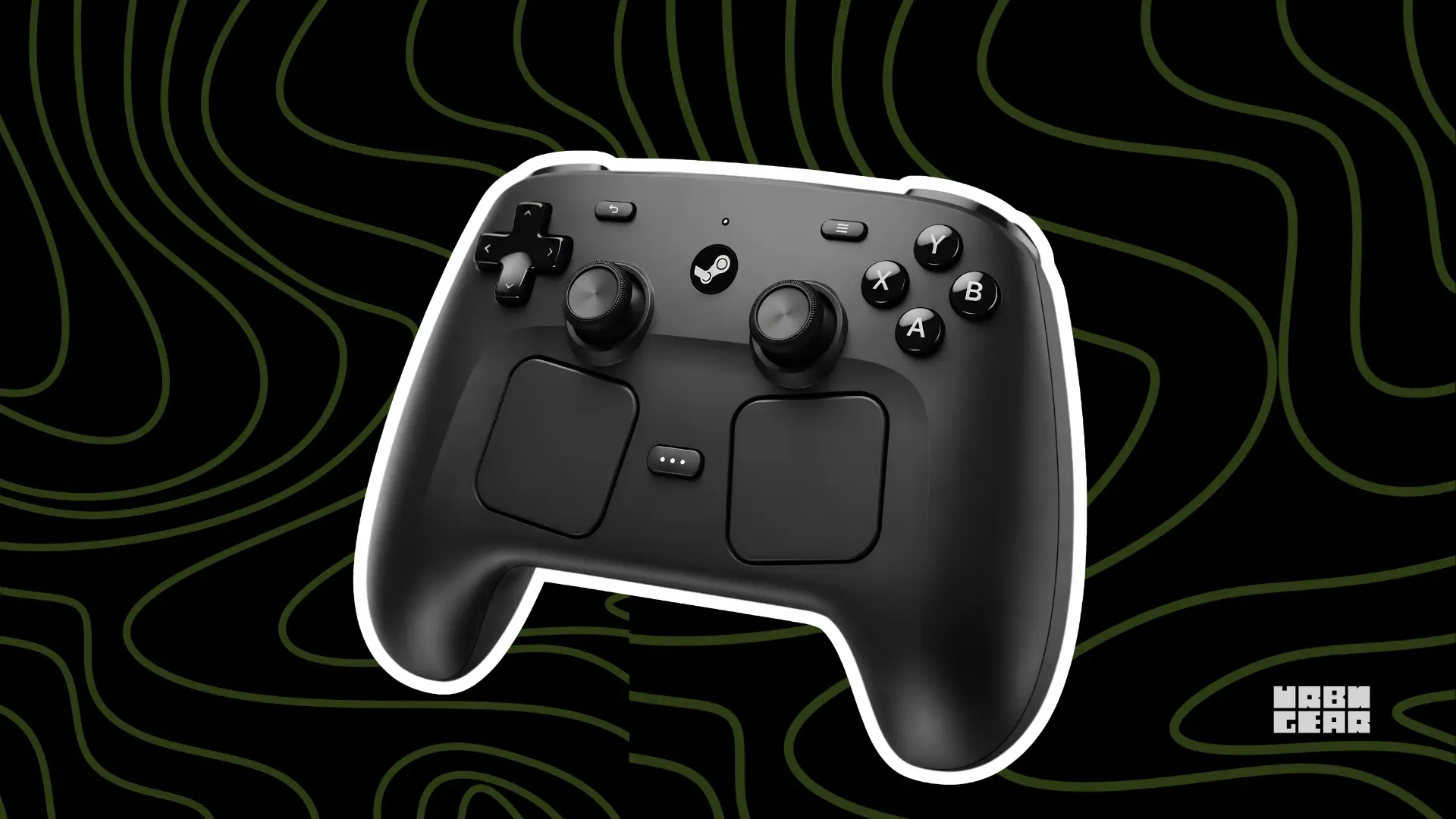
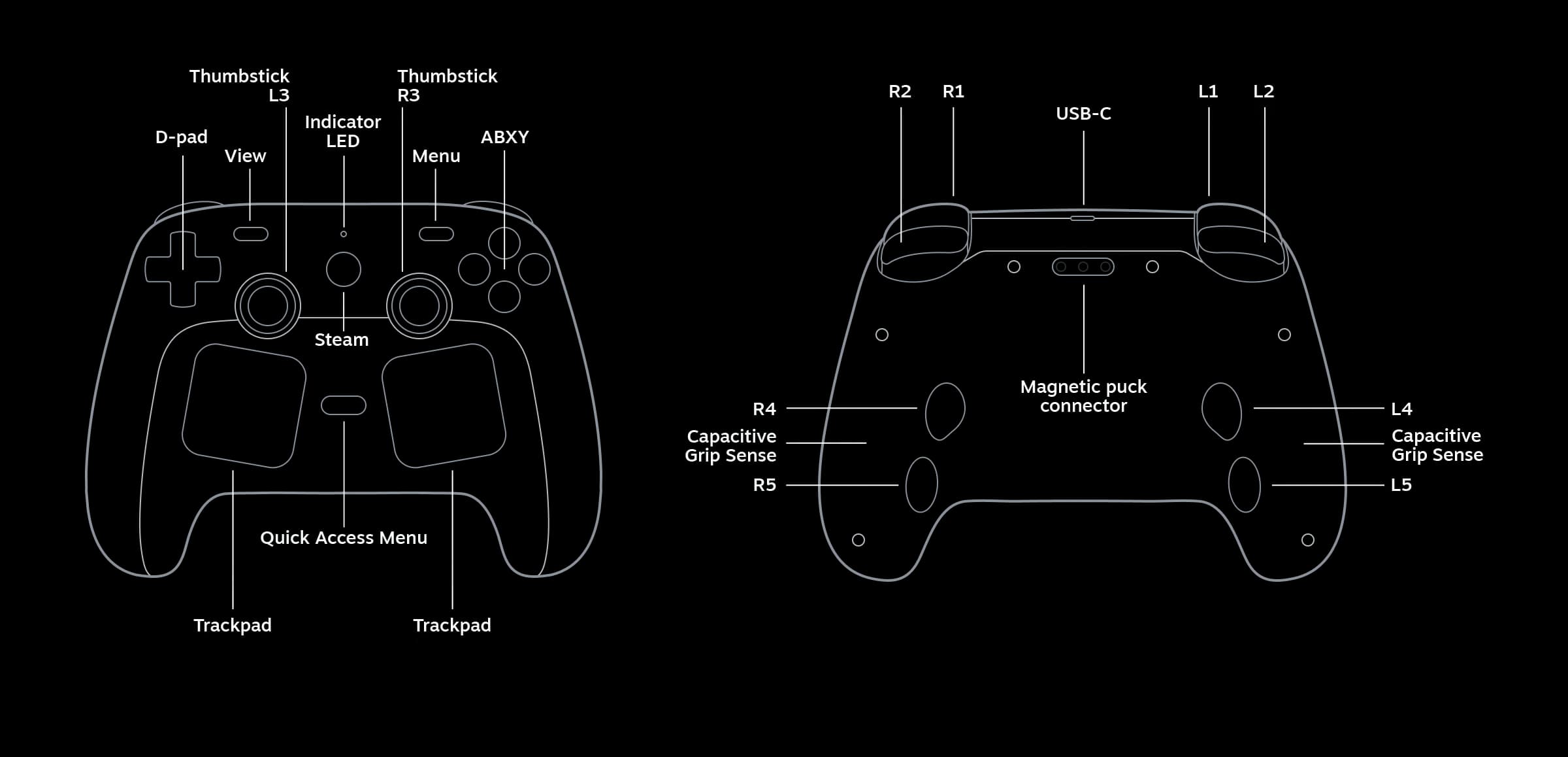
The new Steam Controller, which went on sale May 4th for $99, is nothing like that. It's a confident, well-built gamepad with a layout borrowed almost wholesale from the Steam Deck — dual analog sticks, ABXY face buttons, a D-pad, two haptic trackpads, four rear grip buttons, gyroscope, and capacitive sensors on the grips. Nearly everything is remappable. It sold out in thirty minutes.
I've been using one for two weeks. It's one of the best PC controllers I've touched. It's also, in a very specific and frustrating way, not quite done yet.
The first-generation model rattled when shaken and had a control scheme that rewired your muscle memory before rewarding it. This one is solid, balanced, and immediately familiar. Pick it up and your fingers find the right spots. The triggers have clean tension, the rear buttons are satisfyingly clicky, and nothing flexes or wobbles. It weighs 292 grams — slightly more than a standard Xbox pad, but distributed well enough that extended sessions don't punish your wrists.
The analog sticks use tunnel magnetoresistance technology rather than the potentiometer-based system in most controllers. In practical terms, this means no drift — ever, in theory. After two weeks of heavy use across shooters, platformers, and action RPGs, I haven't had a single unwanted input. The sticks feel precise in a way that's immediately noticeable if you've been trained by years of drift-prone standard controllers.
The charging puck deserves its own paragraph. It's a small rectangular dongle that plugs into your PC via USB-C and doubles as a 2.4GHz wireless transmitter. The controller snaps onto it magnetically when you set it down — cleanly, satisfyingly, like a well-engineered cabinet door. It charges while docked. You can connect up to four controllers to a single puck. It's one of those small design decisions that feels obvious in retrospect but that nobody else seems to have thought to do. Pairing via Bluetooth is also available, though it introduces some latency — fine for casual play, less ideal for anything timing-dependent.
Battery life is rated at 35-plus hours. In testing, I've charged mine once.
The ecosystem advantage is huge
If you're already living in Steam — and with over 50,000 games on the platform, a lot of people are — the Steam Controller becomes something close to a superpower. Steam's controller configuration system lets you remap every input to virtually anything your PC can register: keystrokes, mouse clicks, gamepad buttons, macros. Sensitivity curves, toggle behaviors, half-pull versus full-pull trigger inputs, gyro activation thresholds. It's deep to the point of being overwhelming if you go looking, but the defaults are sensible enough that most games just work without any intervention.
The real magic is continuity with the Steam Deck. Layouts transfer between the two devices automatically — so if you've spent an hour perfecting your control scheme for a specific game on your handheld, those settings are waiting for you on the Controller when you dock the Deck and pick it up. For people who move between handheld and TV play frequently, this is genuinely transformative. It's the same muscle memory, the same button positions, the same shortcuts. Pressing a rear button to take a screenshot works the same way on both devices.
The Steam wall
Here's the friction: the Steam Controller doesn't appear to Windows as a standard XInput gamepad. It communicates through Steam's own input layer. This means that if a game isn't running through Steam — whether it's an Epic Games exclusive, a GOG purchase, an Xbox Game Pass title, or a developer prototype — the controller may not function correctly, or at all.
Adding non-Steam games to your Steam library and launching them through the client is a partial workaround. For some titles, it works perfectly. For others — particularly games with their own external launchers, or games installed through Microsoft's Xbox app, which locks its directories at the system level — it ranges from clunky to impossible. Xbox Game Pass games on Windows are essentially incompatible with the Steam Controller in any usable configuration.
This isn't a new problem. The original Steam Controller had the same limitation, and the third-party ecosystem eventually developed workarounds. Similar tools will almost certainly emerge for this version. But right now, if your game library is spread across multiple storefronts, the Steam Controller will occasionally remind you that it's a product designed to serve Valve's platform more than it's designed to serve you.
Whether that bothers you depends almost entirely on how you game. If Steam is your primary launcher, you may never notice. If you split time between Steam, Xbox Game Pass, and Epic, you'll notice every time.
A controller waiting for its console
The other context problem is the Steam Machine — Valve's console-like living room PC, announced alongside the Controller last November and repeatedly delayed due to memory shortages affecting the broader tech industry. The Steam Controller was clearly designed with the Steam Machine in mind: the living room distance, the TV-scale interface, the couch use case. Its trackpads are well-suited for navigating menus from across the room. The infrared LEDs in the controller body are intended for positional tracking with the Steam Frame VR headset — also delayed, also without a confirmed price or release date.
Using the Steam Controller without either of those products is a bit like receiving a really nice remote for a TV that hasn't shipped yet. You can use it as a controller for your PC, docked Steam Deck, or Steam Link setup, and in those contexts it's excellent. But some features don't have anywhere to fully express themselves yet.
There's a certain irony to this situation. Valve built the Steam Deck to be a complete product — hardware and software integrated, shipping together, fulfilling a defined purpose. The Steam Controller is hardware that has outpaced its ecosystem. It's not incomplete, exactly. But it's clearly building toward something.
The verdict
At $99, the Steam Controller is expensive for a gamepad and a reasonable price for what it actually does. The build quality is excellent. The TMR sticks are among the best I've used. The puck system is clever. The customization runs deeper than any other controller on the market.
The limitations are real but conditional. The Steam-only requirement will frustrate some users significantly and barely register for others. The absence of the Steam Machine creates a product that's excellent in its current context and optimized for a context that doesn't fully exist yet.
If you play mostly through Steam and want a single controller that works identically whether your Deck is in your hands or docked to your TV, this is the one to buy. If your library is split between storefronts, temper your expectations — or wait for the third-party workaround tools that are inevitably coming.
Valve sold out in thirty minutes. The demand is clearly there. The platform is almost there. The hardware already is.
The Steam Controller (2nd generation) is available at store.steampowered.com for $99. It has been out of stock since launch; Valve has stated a restock timeline is forthcoming.