Apple’s rumored first foldable iPhone may arrive as one of the company’s most closely watched hardware launches in years. But if the latest supply-chain reporting proves accurate, the bigger story may not be the fold itself — it may be how difficult the device is to buy at launch.
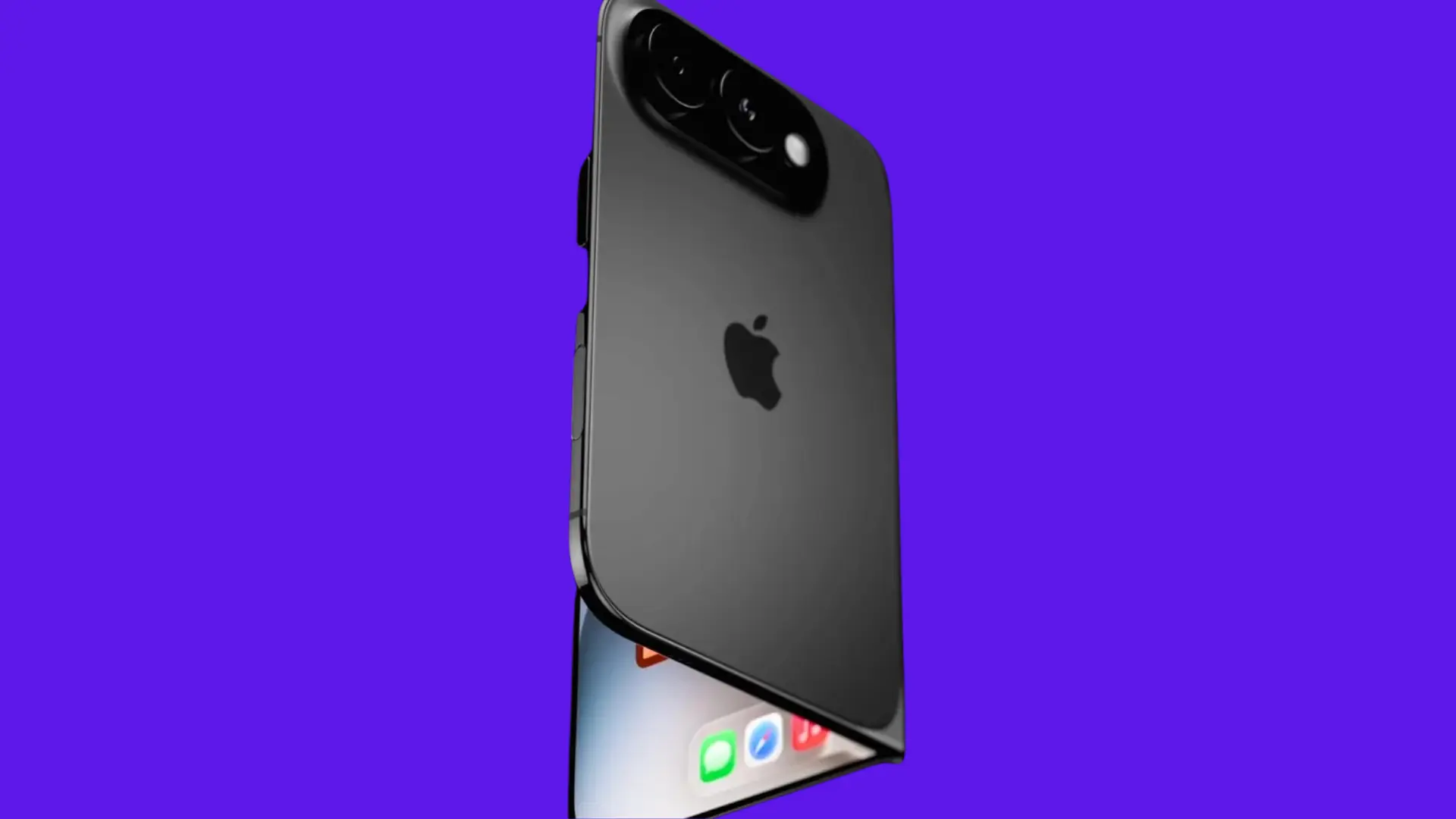
The product is widely referred to in the rumor cycle as the “iPhone Ultra” or “iPhone Fold,” but neither name has been confirmed by Apple. What analysts and Apple-focused reporters broadly expect is a premium, book-style foldable iPhone that opens from a regular phone-like outer screen into a small tablet-sized inner display. The current rumor consensus points to a roughly 5.5-inch exterior display and a 7.8-inch interior display, with a very thin unfolded body, premium materials, and a price that could land around $2,300 to $2,500.
That would make the device less of a mainstream iPhone replacement and more of a new ultra-premium category: part iPhone, part iPad mini, and part technology showcase. The question is whether Apple can make enough of them in the first months to meet demand.
In a July 2026 supply-chain note, analyst Ming-Chi Kuo said his latest industry survey points to only 7–8 million foldable iPhone assembly shipments in the second half of 2026. More importantly, Kuo estimates just 0.5–1 million units in the third quarter, around 10% of the second-half total. By comparison, he estimates iPhone 18 Pro and iPhone 18 Pro Max shipments at roughly 20–22 million units in the same quarter — enough to support a normal official launch.
Kuo’s conclusion is that Apple may repeat the iPhone X playbook: announce the new flagship alongside the rest of the premium iPhone lineup, but open preorders and start official sales later. In 2017, Apple unveiled the iPhone X on September 12, but preorders did not begin until October 27 and availability started November 3. Apple’s own launch announcement confirms that delayed cadence.
The comparison matters because the iPhone X was not delayed simply for marketing drama. It introduced a major design shift: OLED, the all-screen form factor, Face ID, and the TrueDepth camera system. Those changes made early production harder. The foldable iPhone could face an even more complex version of the same problem: a new flexible display, a precision hinge, thinner mechanical tolerances, new durability requirements, and Apple’s usual quality-control standards.
Reuters reported in April, citing Nikkei Asia, that Apple’s foldable iPhone had encountered engineering-test setbacks that could delay mass production and shipments by months in a worst-case scenario. The same Reuters report noted Bloomberg’s reporting that Apple was still aiming for a September launch with the iPhone 18 Pro models, but that timing was not final because full production had not yet ramped.
The supply constraints are not difficult to understand. Foldable phones are harder to manufacture than slab phones. The display must bend repeatedly without obvious damage, the crease must be minimized, the hinge must feel precise over years of use, and the chassis must be thin without sacrificing durability. Apple is also rumored to be using a premium frame and hinge system, with reports pointing to titanium, aluminum, stainless steel, and custom display engineering. Even if each individual component is technically ready, scaling all of them at iPhone quality and in iPhone volumes is a different challenge.
That is why early availability could be unusually tight. Kuo expects demand to remain strong through the end of 2026 despite the high price. He also warned that preorders could sell out quickly, delivery estimates could stretch to four to six weeks or longer, and resale prices could briefly move well above the official price if inventory is scarce.
Apple has used controlled launches before. Vision Pro launched first in the United States at $3,499, with preorders beginning January 19, 2024, and availability starting February 2. The first Apple Watch also began with a more curated buying process: previews, try-on appointments, online preorders, and limited launch countries. These launches suggest Apple is comfortable introducing new categories before they are truly mass-market products.
Strategically, that may be the point. Apple does not need the first foldable iPhone to outsell every Pro model immediately. It needs the product to define what a foldable iPhone is supposed to be. A limited launch can create scarcity, protect margins, manage first-generation risk, and allow Apple to study real-world demand before ramping production more aggressively.
The market impact could still be significant. IDC forecasts foldable smartphone shipments will grow 30% year over year in 2026, helped by Apple’s entry, and projects Apple could capture more than 22% of foldable unit share and 34% of foldable market value in its first year thanks to an expected average selling price around $2,400. That would put pressure on Samsung, Google, Honor, Huawei, and other foldable makers in two ways. First, Apple could validate the category for buyers who have been waiting for an iOS foldable. Second, its high price could push the premium end of the market even higher.
For Samsung, the risk is not that Apple invents foldables — Samsung has been shipping them for years — but that Apple reframes the category for premium buyers. Google could benefit indirectly if foldables become more mainstream, but Pixel Fold devices will face a stronger iOS alternative. Chinese brands such as Honor and Huawei, already aggressive on thinness and hinge engineering, may respond by pushing faster hardware innovation, especially in Asia and Europe.
For consumers, the advice is simple. Buyers who absolutely want Apple’s first foldable and can tolerate a first-generation product should be ready to preorder immediately if Apple opens orders. Waiting even a few hours could mean weeks of delay if Kuo’s supply estimates are close. But most users should think carefully before paying more than $2,000 for a first-generation foldable device.
Early buyers may face compromises: higher repair costs, limited case choices, possible durability unknowns, no guarantee of Face ID, fewer cameras than a Pro Max, and software that may need time to mature for the larger display. The second or third generation is likely to be thinner, cheaper to manufacture, more durable, and better supported by apps.
Still, the rumored foldable iPhone could be Apple’s most important hardware experiment since Vision Pro and its most consequential iPhone redesign since iPhone X. If it launches in September but ships later in limited quantities, that should not necessarily be read as failure. It may simply reflect the reality of building a new kind of iPhone at Apple’s standards.
For Apple fans, the message is clear: the foldable iPhone may be real soon, but easy to buy much later. For the broader smartphone market, Apple’s entry could turn foldables from a niche Android category into the next major premium battleground.