
Narrow desks make headphone storage feel more complicated than it should.
The headphones are not huge, but the wrong stand still steals the exact part of the desk that was supposed to stay open for a notebook, lamp, mouse sweep, or just visual breathing room.
That is why this category needs a stricter filter than “looks nice on a desk.”
For a narrow desk, the strongest headphone storage usually does one of two things:
lives under a monitor shelf or monitor zone instead of claiming a side zone; uses such a disciplined footprint that it can sit behind or below the screen without crowding the working area.
That is also why this page includes one true under-shelf holder and three low-footprint stands. The real job is the same in all four cases: keep the headphones reachable without forcing them to become another full-size desk object.
- Strongest zero-footprint answer: BALOLO Headphone Hook
- Cleanest budget stand: IKEA MÖJLIGHET Headset and Tablet Stand
- Most adjustable desktop stand: IKEA LÅNESPELARE Accessories Stand
- Most refined wood stand: Oakywood Headphones Stand
How we narrowed the list
This is a category where generic headphone stands start looking repetitive very fast.
For this page, I gave more weight to products that:
stay in the monitor zone or under-shelf zone instead of demanding their own side footprint; publish enough official detail to judge real fit, or at least directional fit, on a narrow desk; support common over-ear headphones without obviously awkward contact points; do something more disciplined than “large base plus tall rod”.
One important note: not every brand publishes exact product footprint dimensions here. Where a brand only exposed packaging measurements or a single product dimension, I treated that as a directional fit clue rather than a precise on-desk measurement.
That is also why this page is a companion to Headphone hooks for better desk organization, not a replacement for it. Hooks are still the cleaner answer when the underside of the desk is available. This page is for tighter desks where the headphones need to live in the monitor strip or under a shelf instead of hanging somewhere deeper in the leg zone.
A simple steel stand that works well on narrow desks because it stays visually light and can live in the strip below the monitor without feeling precious.
- Packaging: 10 ¾" L x 6" W x 3 ¼" H
- Durable steel structure with rounded edges
- Holds headphones plus a phone or tablet
A more expressive adjustable stand that can hold headphones while also handling lighter desk items when the setup needs one flexible storage piece.
- 13 ½" overall height
- Packaging: 11" L x 4 ¼" W x 3 ¾" H
- Moveable fingers and hand in solid beech
A disciplined premium wood-and-steel stand with a genuinely small base, which makes it unusually easy to keep in the monitor strip on a narrow desk.
- 4.3" L x 4.3" W x 11" H
- Solid wood base holds small items
- Built to save space without crowding surfaces
What matters most on a narrow desk
The first mistake is treating all headphone storage like the desk has infinite side room.
On a narrow desk, the better questions are:
footprint: does the stand sit in the monitor strip, or does it consume a side zone?; height and shape: does it visually crowd the monitor area or stay disciplined?; headband support: does it hold over-ear headphones without pinching or flattening them awkwardly?; workflow honesty: do you want the headphones visible in front of you or hidden under a shelf?; multi-use value: if it takes space, does it at least do a second useful job?
That is why the true zero-footprint answer is so strong here. If the desk already uses something like Desk shelves that work on small desks, a mounted headphone holder often makes more sense than another freestanding stand.
If the underside of the desk is still available and you are not tied to the monitor zone, Headphone hooks for better desk organization is still the cleaner category.
1. BALOLO Headphone Hook
BALOLO Headphone Hook is the strongest zero-footprint answer because it solves the narrow-desk problem more directly than any freestanding stand can.
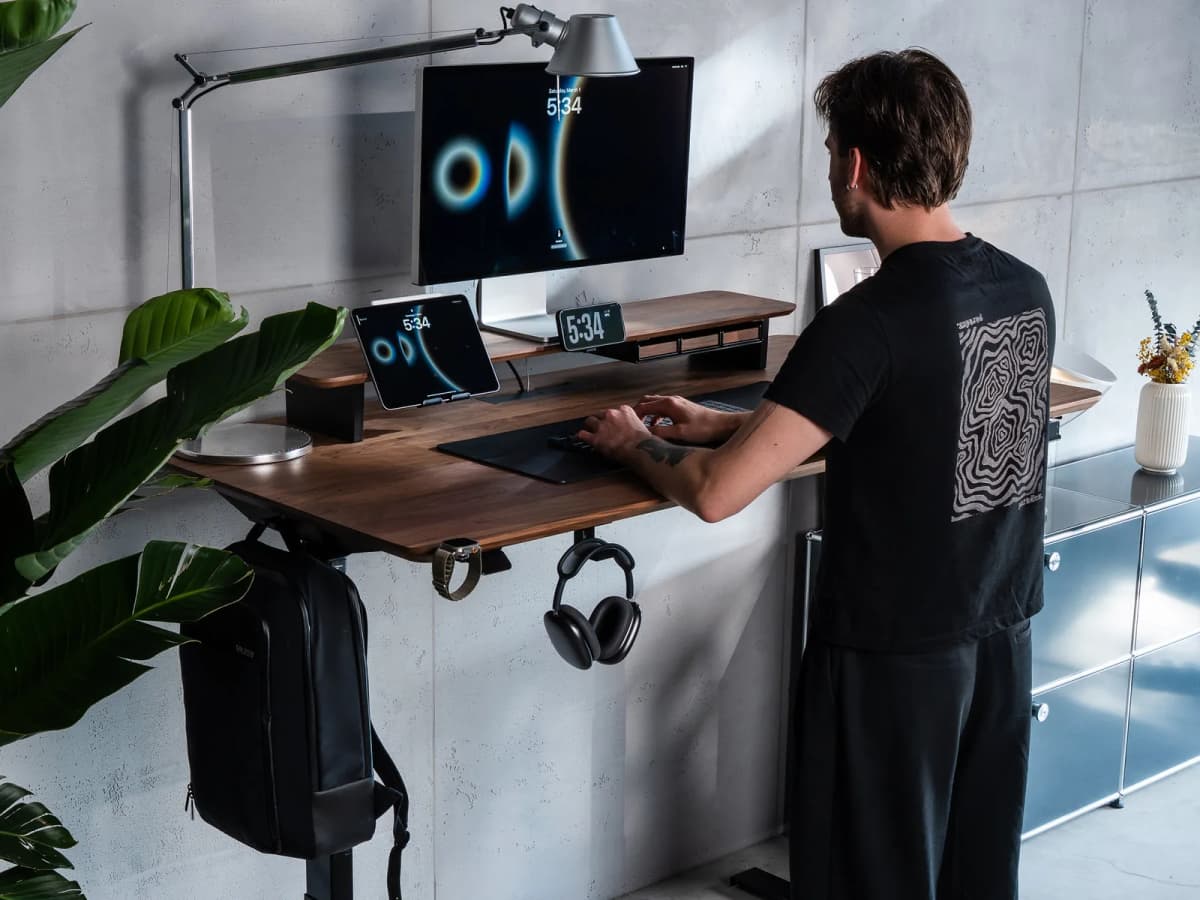
BALOLO’s official page describes it as a headphone holder mounted under the Desk Cockpit or Wall Cockpit, built to keep headphones within easy reach while staying visually minimal. The page also says it is compatible with common headphones from brands like Sony, Bose, Sennheiser, and Beyerdynamic.
That matters because this is not just “a hook for people who already bought BALOLO.”
It is one of the few products in this category that genuinely keeps the headphones in the under-monitor zone without spending any actual desk footprint to do it.
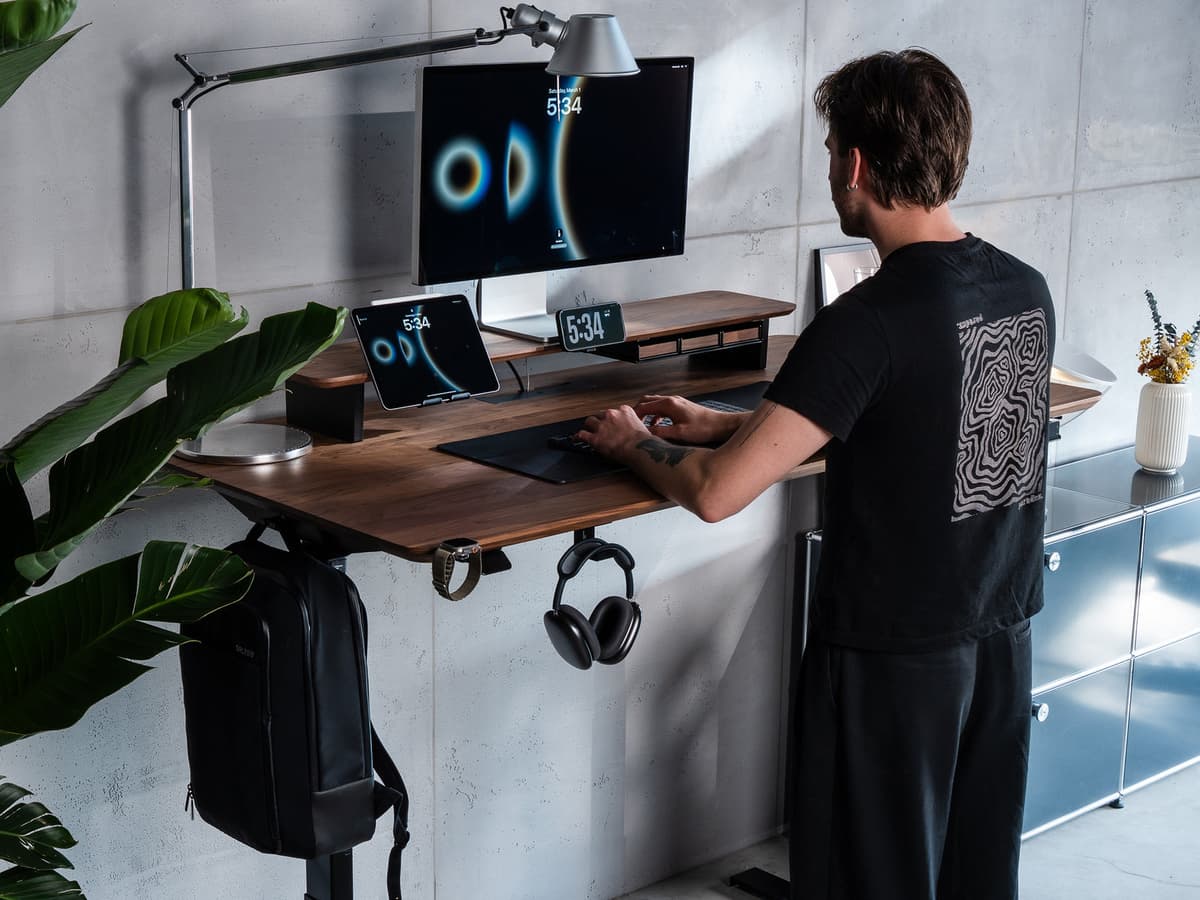
If your desk already uses a cockpit or shelf system, this is the cleanest possible way to keep the headset close:
no side-zone sacrifice; no tall stand shape beside the monitor; no extra object fighting for desk depth.
Strongest fit: compact desks already using a BALOLO shelf or similar under-monitor accessory system.
Main tradeoff: it is not a standalone answer. If you do not have the compatible cockpit setup, this is the wrong product.
2. IKEA MÖJLIGHET Headset and Tablet Stand
MÖJLIGHET is the cleanest budget stand because it does the narrow-desk job without pretending to be more elaborate than it needs to be.
IKEA’s official page says it helps keep headphones, mobile phones, and tablets organized, is perfect on a desk or in a bookcase, and uses a durable steel structure with rounded edges. IKEA’s measurements section lists packaging at 10 ¾ inches long, 6 inches wide, and 3 ¼ inches high.
That does not make it the tiniest object here, but it does make it predictable.
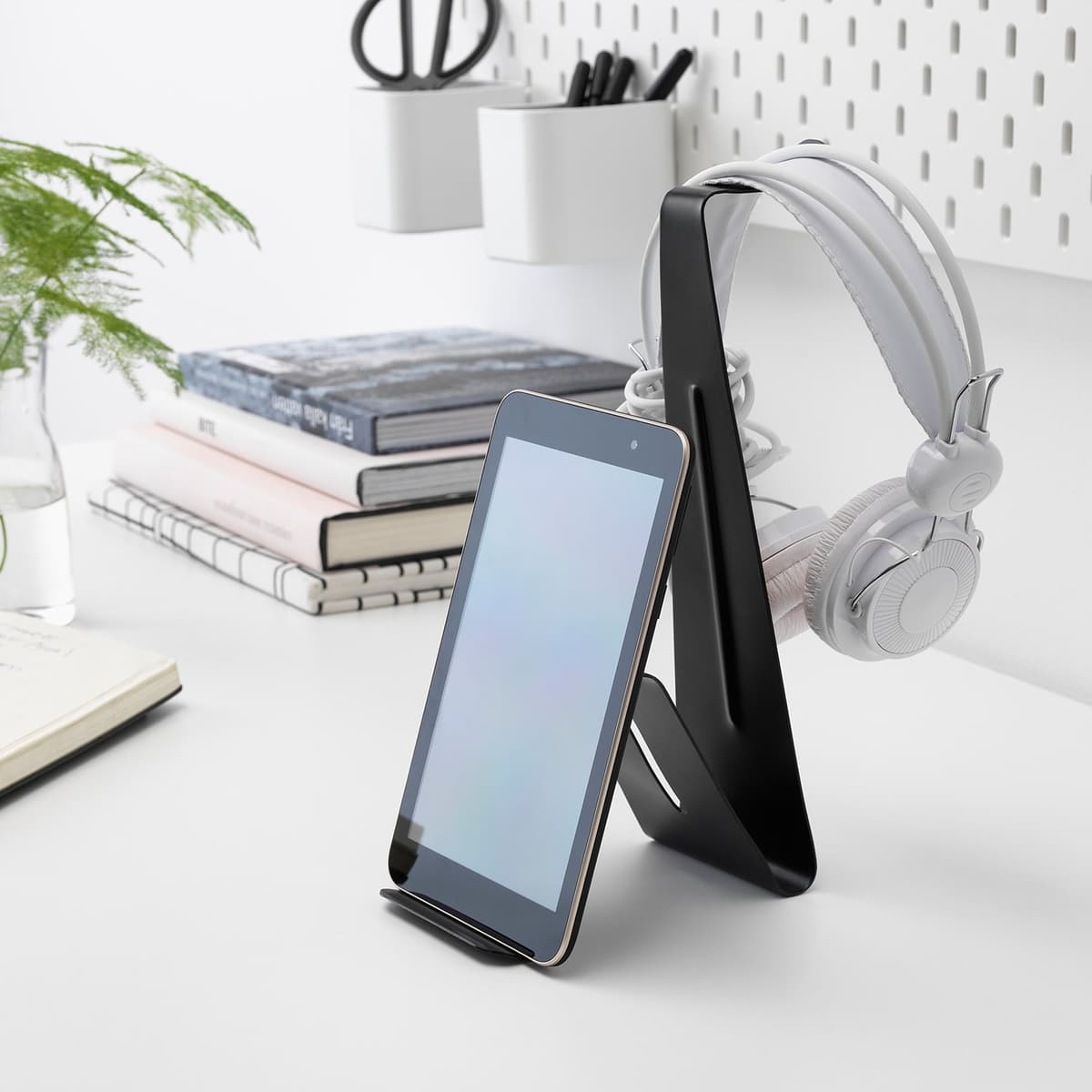
MÖJLIGHET works well when you want the headphones close to the screen and do not want a decorative or bulky stand. It also earns its place because it can hold a phone or tablet when the headset is in use, which is unusually practical on a tight desk.
This is the stand for people who want a low-drama answer:
inexpensive; simple; stable; easy to move if the setup changes.
Strongest fit: narrow desks that need one affordable stand in the strip below the monitor or at the back edge of the desk.
Main tradeoff: IKEA does not publish a full standalone product footprint beyond packaging, so the fit case is based more on shape, usage intent, and packaging size than on exact base dimensions.
3. IKEA LÅNESPELARE Accessories Stand
LÅNESPELARE is the most adjustable desktop stand because it behaves more like a flexible accessory perch than a fixed headphone rod.
IKEA’s current page says the fingers and hand are moveable, the product uses solid beech for the main parts, and the stand height is 13 ½ inches. IKEA’s packaging section lists 11 inches long, 4 ¼ inches wide, and 3 ¾ inches high.
That extra adjustability is the real reason it belongs.
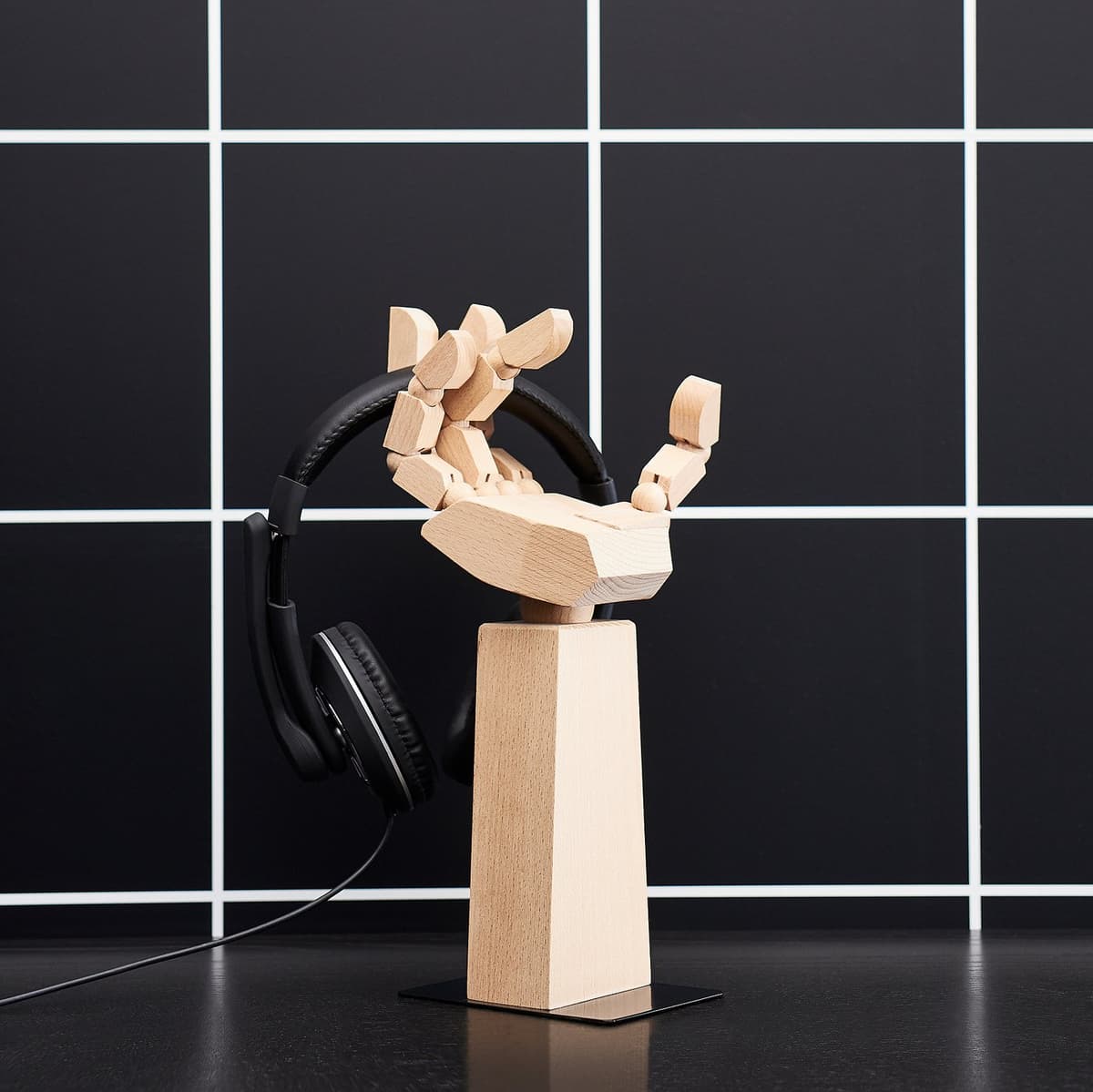
On a narrow desk, this is better than a generic tall stand when the storage job changes a lot. You can use it for headphones most of the time, but it can also handle lighter accessories or cable staging in a way a fixed stand cannot.
It also has a narrower-looking base than many gaming-themed stands, which helps it stay more believable on tighter desks.
Strongest fit: buyers who want one flexible stand that can hold headphones while adapting to slightly different desk roles over time.
Main tradeoff: it is visually more present than MÖJLIGHET or the BALOLO hook, so it is not the calmest pick for ultra-minimal setups.
4. Oakywood Headphones Stand
Oakywood is the most refined wood stand because it is one of the few premium options here that still keeps the base disciplined enough for a narrow desk.
Oakywood’s official dimensions list the stand at 4.3 inches long, 4.3 inches wide, and 11 inches high. The product page also describes the base as useful for holding small items and says the size is meant to organize the workspace without crowding surfaces.
That is exactly why it makes sense here.
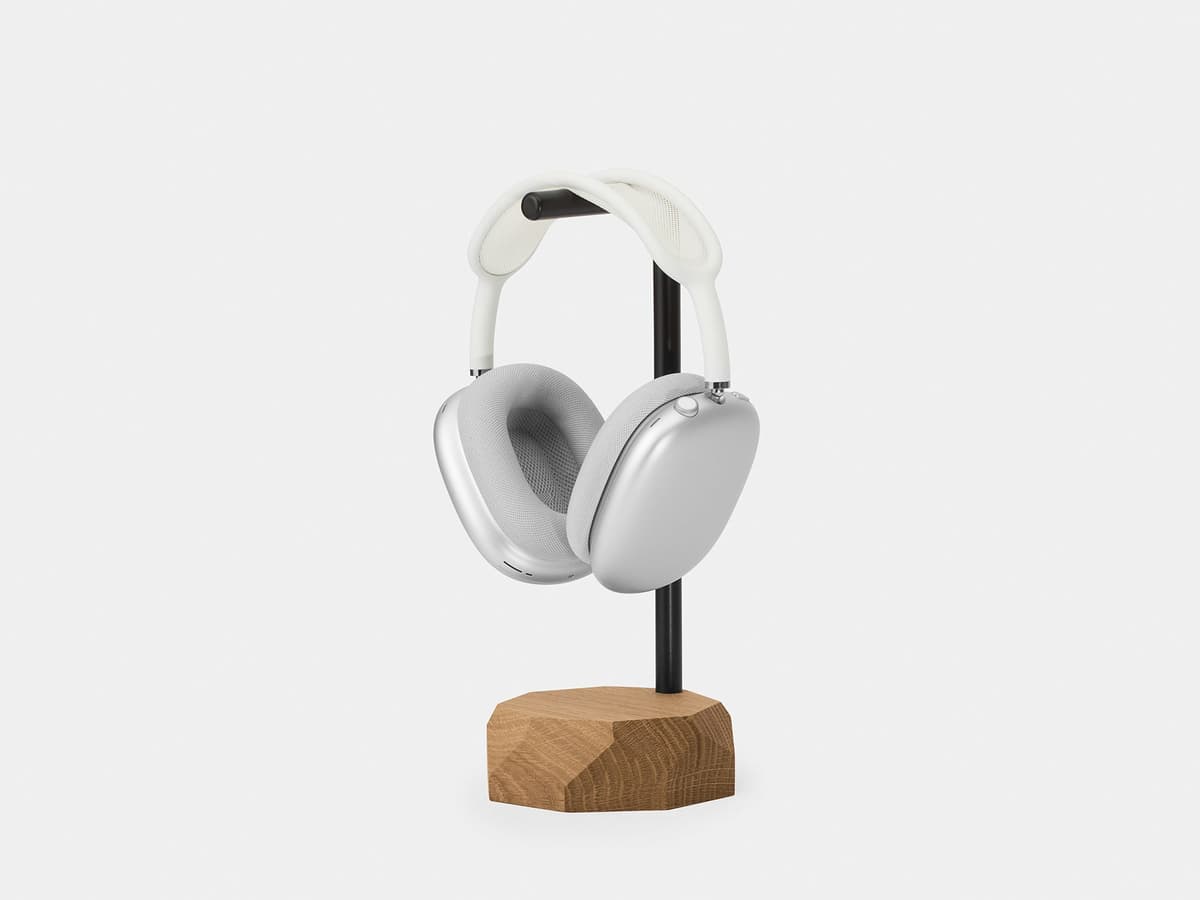
Most premium wood headphone stands are easy to admire and harder to justify on a narrow desk. This one is different because the base stays compact enough to sit in the monitor strip or back corner without instantly eating the side zone.
It is also the strongest visual answer when the desk is already material-driven and the stand needs to feel intentional rather than purely utilitarian.
Strongest fit: premium home desks where the headphones should stay visible and the stand needs to live in a tight back-edge zone instead of a wide side area.
Main tradeoff: price. If the job is simply “store headphones somewhere,” the IKEA options are easier to justify.
When this category is the better answer than a hook
Choose an under-monitor stand or monitor-zone holder when:
the underside of the desk is already busy; you do not want anything hanging in the leg zone; the headphones need to stay in sight for frequent use; the back strip under the monitor is the calmest available storage zone.
Choose a true hook instead when:
the desk edge or underside is open; disappearing the headphones matters more than seeing them; the desktop already feels crowded near the monitor.
That is the cleanest split between this page and Headphone hooks for better desk organization.
Bottom line
If you already use a desk shelf or cockpit, BALOLO Headphone Hook is the cleanest answer because it spends no desktop footprint at all.
If you want the simplest budget stand, IKEA MÖJLIGHET is the safer choice. If you want one more flexible stand that can play a few roles, IKEA LÅNESPELARE is the more adaptable pick. If the setup is design-led and the stand needs to feel like part of the workspace, Oakywood is the strongest premium answer.
That is the real narrow-desk filter:
no footprint if possible: BALOLO; clean and inexpensive: MÖJLIGHET; more adaptable: LÅNESPELARE; premium and compact: Oakywood.