
Desk shelves sound harmless until one lands on a small desk.
Then the real question shows up.
Did it create a second useful layer for the setup, or did it just turn the back half of the desk into one more bulky object?
That is the buying filter here.
On a compact desk, a good shelf can:
create a cleaner monitor zone; lift everyday accessories off the main work plane; open up storage underneath for a dock, notebook, or low-profile gear; make the desktop feel more organized without pushing everything sideways.
A bad one does the opposite. It steals depth, overcommits the width, and leaves the keyboard shoved too close to the front edge.
That is why this roundup stays focused on current official specs from brands that publish real dimensions, clearance, and capacity details. The goal is not to collect every nice-looking shelf online. The goal is to find the few that still make sense when the desk itself is already size-constrained.
- overall desk shelf for small desks: BALOLO Setup Cockpit Medium
- compact clamp-on shelf: UPLIFT Desk Shelf or Monitor Stand (15")
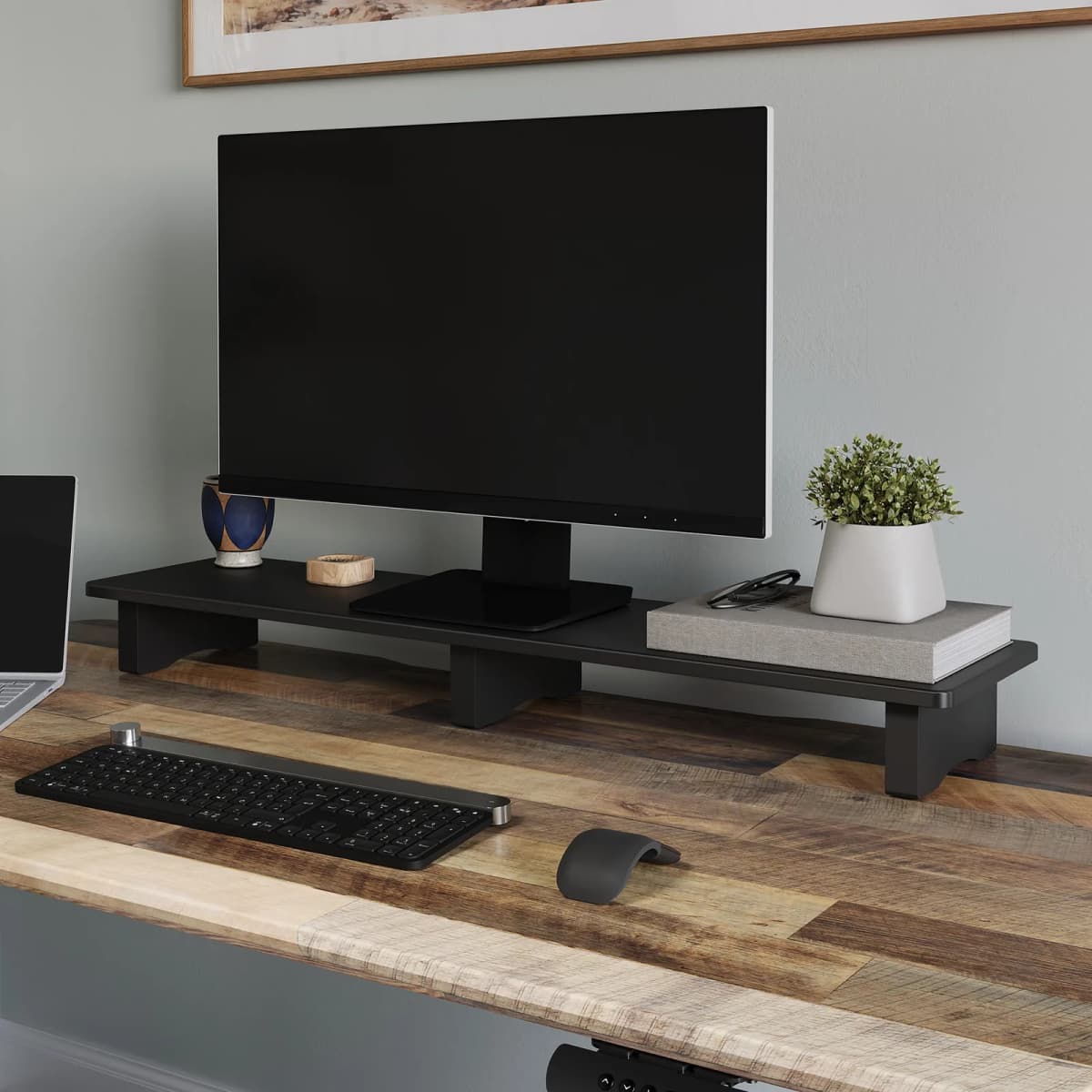
- wide shelf for 48-inch desks: Vari Desk Shelf
- premium heavy-duty wood shelf: Ergonofis Desk Shelf
How we narrowed the list
This category gets messy because a lot of products sold as desk shelves are really just oversized monitor stands, while others are full setup platforms that only make sense on big desks.
For this page, I gave extra weight to shelves that:
publish enough dimensions to judge real fit on smaller desks; create a genuine second plane instead of just a tiny monitor lift; keep depth under control so the main working zone still works; offer enough under-shelf clearance to be useful in daily setups.
That is also why this page is not the same thing as Monitor risers that improve posture and desk organization. A riser is often about screen height first. A desk shelf is more about creating a broader organization layer without turning the desk into a storage shelf.
What matters most on a small desk
The first mistake is shopping desk shelves by aesthetics alone.
On a small desk, the better questions are:
width: does the shelf leave enough breathing room on a 48-inch desk or smaller?; depth: does it preserve enough front-to-back space for the keyboard and mouse zone?; under-shelf clearance: can it actually hold the kind of low-profile items you want to park there?; mount style: clamp-on, freestanding, or modular system?; job honesty: is it solving organization, monitor height, or both?
That last point matters.
If your real problem is still monitor distance or articulation, a shelf is often the wrong category and a monitor arm is the better answer. Monitor arm vs monitor riser: which is better for posture? is the cleaner decision read if you are still sorting that out.
If the desk already basically works and you just need a calmer second layer above the main work plane, that is where shelves start making sense.
If the whole setup still feels fragile, start first with How to set up a small desk without losing usable space. A shelf should support the layout, not become the layout.
1. BALOLO Setup Cockpit Medium
BALOLO Setup Cockpit Medium is the best overall pick here because it does the hardest thing well: it feels like a real desk shelf without immediately becoming too large for a compact desk.
BALOLO’s current official page lists:
29.1 x 9 x 4.7 inches; 3.9 inches of clearance underneath; 25 kg capacity; modular design; manufactured in Germany.
That width is the key.
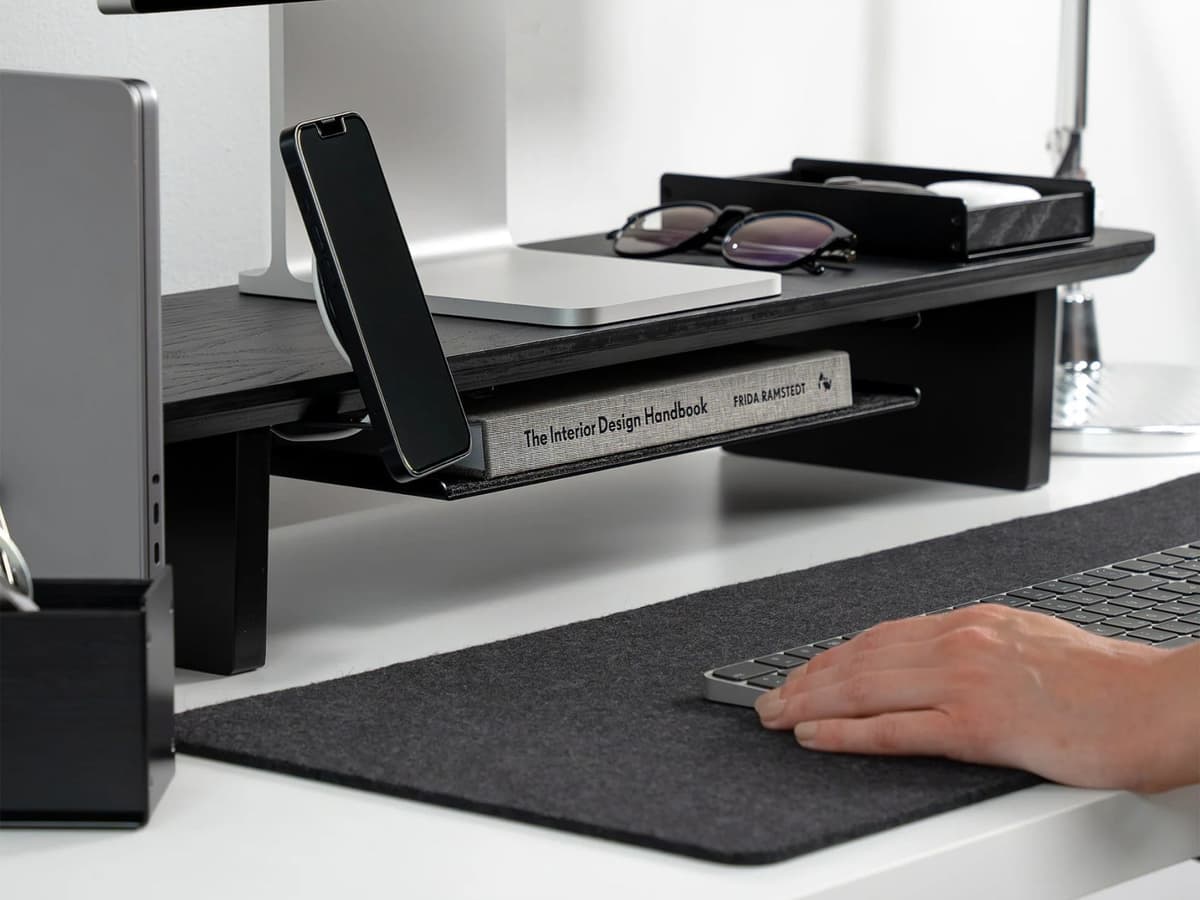
At just over 29 inches, it gives you a meaningful second layer without demanding the whole width of a 48-inch desk. That makes it much easier to keep a side zone, lamp placement, or speaker position under control.
The modular design is also a real advantage in this category. It gives the shelf a clearer organization role instead of behaving like a fixed plank that either works or does not.
Strong fit for: smaller desks that need one intentional shelf system with enough structure to organize more than just the monitor base.
Main tradeoff: it is premium-priced, and the under-shelf clearance is useful for flatter accessories, notebooks, and docks rather than taller storage.
2. UPLIFT Desk Shelf or Monitor Stand (15")
UPLIFT’s 15-inch shelf is the best compact clamp-on option because it solves the shelf problem in a much smaller footprint than the typical full-width setup shelf.
From UPLIFT’s current official page and specs:
15.4 inches overall width; 8.6 inches overall depth; 4 inches above-desk clearance; 25 lb capacity for the 15-inch shelf; clamp compatibility with desktops 0.75" to 1.75" thick.
That is why it belongs here.
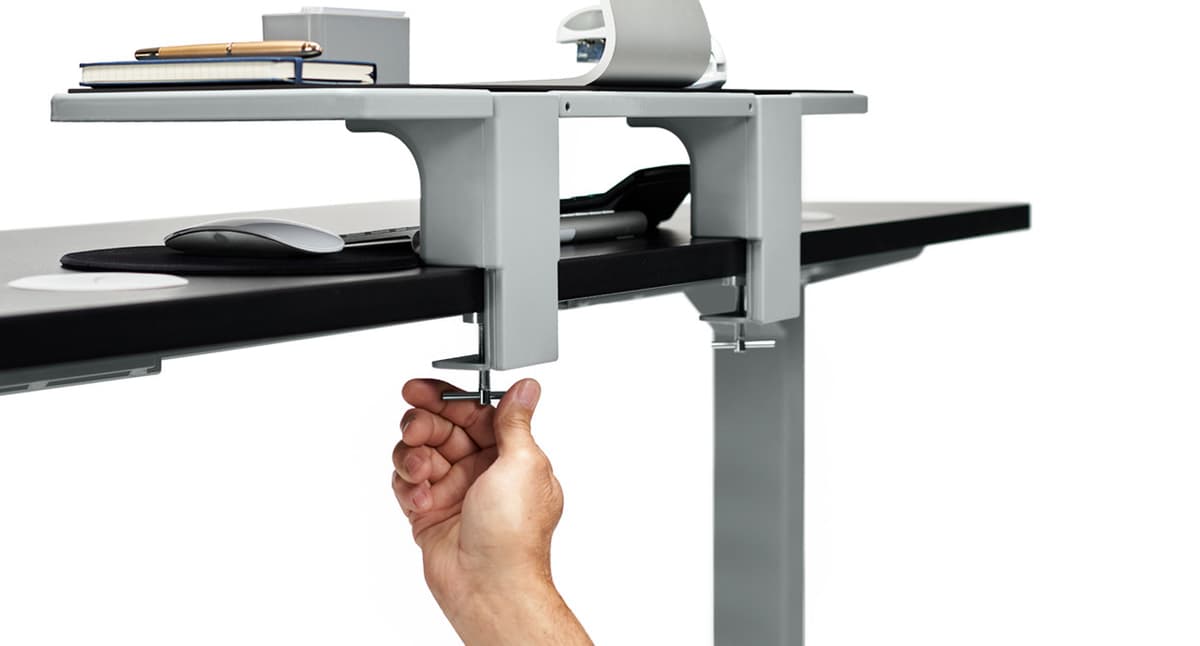
This is not the shelf for someone who wants one long platform across the whole back of the desk. It is the better pick when you want a compact vertical zone for speakers, a dock, a smaller monitor setup, or just a cleaner accessory layer without giving up the rest of the desktop.
The clamp-on design also matters more on smaller desks than larger ones. No drilling, no committed hardware, and no big footprint spread across the whole width.
Strong fit for: very compact desks that need one small shelf zone rather than a full-width platform.
Main tradeoff: it is narrower and shallower than the more furniture-like shelves here, so it is less useful if you want one broad platform for a whole monitor-and-accessory layout.
3. Vari Desk Shelf
Vari Desk Shelf is the best wide shelf for a 48-inch desk because it gives you a more complete monitor-and-accessory plane without getting as deep or visually heavy as some premium wood shelves.
Vari’s official product page and measurement image show:
40 inches wide; 8 1/8 inches deep; 4 inches high; 50 lb weight capacity; support for up to two monitors.
That makes it a strong middle-ground choice.
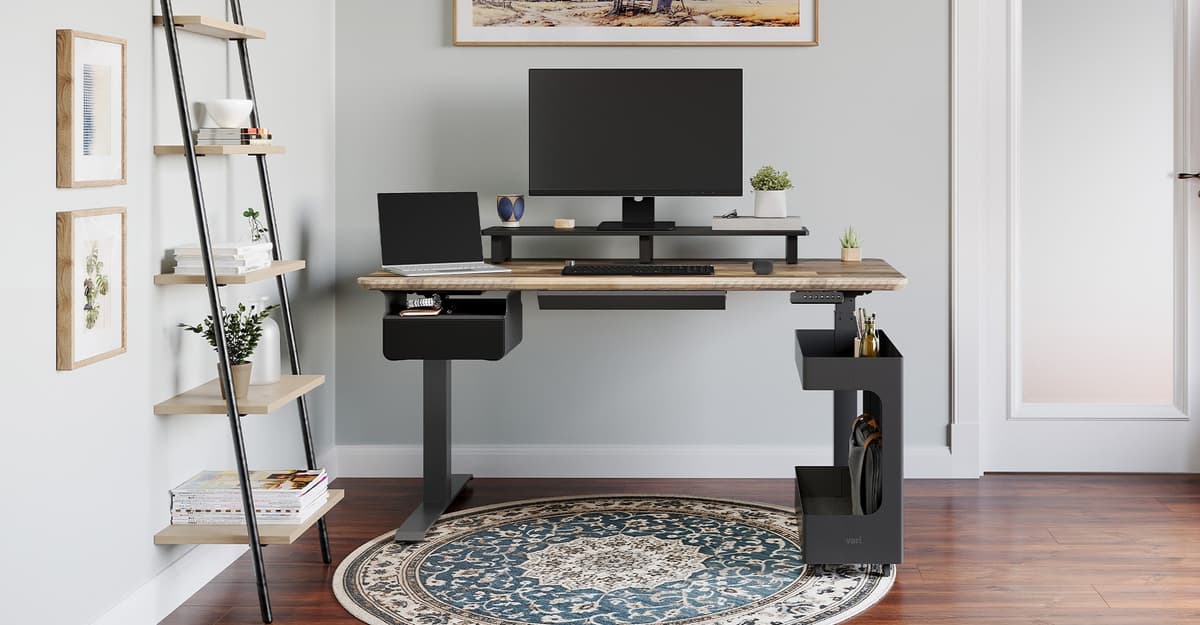
It is clearly wider than the BALOLO or UPLIFT options, but the depth stays disciplined. On a 48-inch desk, that matters more than people expect. A shelf that is slightly narrower but much deeper can crowd the main work zone faster than a wider, slimmer one.
This is also the most straightforward “one shelf, one clean line” answer in the roundup.
Strong fit for: 48-inch desks or slightly wider setups where you want one broad shelf for one or two displays plus a cleaner accessory layer underneath.
Main tradeoff: it is still a 40-inch shelf. If the desk is especially short or the side zones are already busy, it can feel too committed.
4. Ergonofis Desk Shelf
Ergonofis Desk Shelf is the premium heavy-duty pick because it combines a large usable surface, meaningful under-shelf space, and much stronger load capacity than most lighter setup shelves.
Ergonofis’ current official product details describe:
a 42" x 10" x 3/4" stand surface; 5-inch height; 23 1/4" x 4 3/8" storage space underneath; support for up to 120 lb; fit for 1 or 2 monitors.
That is a serious shelf.
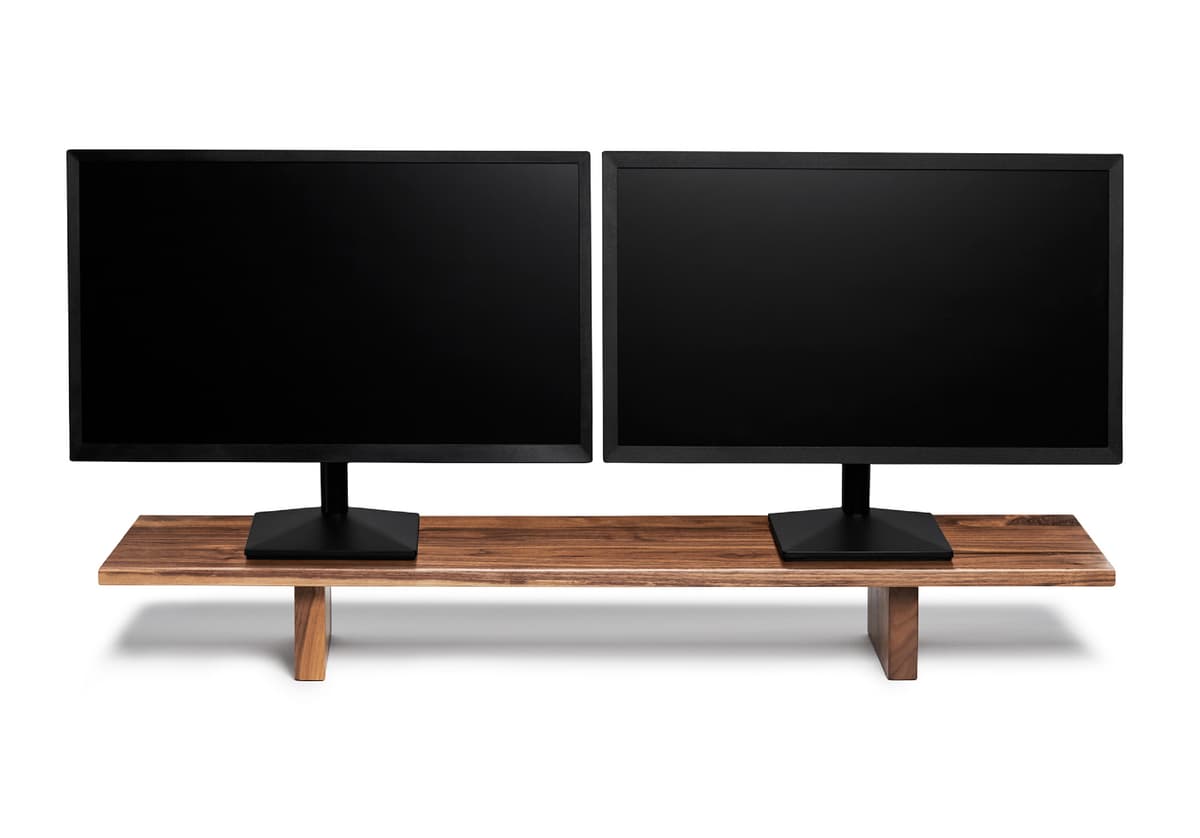
It is the right kind of premium option for buyers who want one substantial wood shelf instead of combining several smaller organization accessories. The under-shelf space is also more useful than on many slimmer monitor shelves because it is large enough to matter.
But this is not a casual small-desk recommendation. On a narrow desk, 42 inches is a major commitment.
Strong fit for: 48-inch desks and wider that want one premium shelf with more real storage utility and a stronger materials story than lighter desk shelves.
Main tradeoff: size. This is easy to overdo on a truly tight setup.
Which one should you actually buy?
Use this shortcut:
choose BALOLO Setup Cockpit Medium if you want the best balance of compact width, real shelf utility, and modular organization; choose UPLIFT Desk Shelf or Monitor Stand (15") if your desk is tight enough that a full-width shelf would be too much; choose Vari Desk Shelf if you have a 48-inch desk and want one clean, wide platform without too much depth; choose Ergonofis Desk Shelf if you want the most substantial premium shelf here and your desk can genuinely spare the width.
That is the practical split.
The best desk shelf for a small desk is not the one with the most dramatic setup photo. It is the one that creates a second useful layer without shrinking the main work zone underneath it.
When a desk shelf helps a compact setup
A desk shelf usually helps when:
the monitor distance is already basically fine; the desk needs a second layer for a dock, notebook, speakers, or flatter accessories; the center zone feels visually messy even though the desk is not actually overloaded; you want more organization above the desk before moving to under-desk storage.
That is why shelves pair well with:
low-profile keyboards; docks and chargers; smaller speakers; narrow accessories that do not need their own side-zone footprint; under-monitor headphone stands if the headset should live below the screen instead of on the desk edge.
If the clutter problem is lower down, Under-desk drawers that work on small desks, Desk drawer organizers for shallow desks, or Under-desk power strips for cleaner cable runs is often the smarter follow-up.
When a desk shelf is the wrong fix
Skip this category if:
the monitor already feels too close; the keyboard is already getting pushed toward the front edge; the real need is full monitor articulation; the desk is so shallow that adding a second plane only makes the depth problem worse.
That is when Monitor arms that work on small desks or Monitor risers that improve posture and desk organization is the better next step.
Bottom line
If you want the cleanest all-around answer, start with BALOLO Setup Cockpit Medium. If your desk is too tight for a true full-width shelf, UPLIFT’s 15-inch Desk Shelf is the safer compact move. If the desk is 48 inches wide and needs one broad, disciplined shelf, Vari Desk Shelf is the better fit. And if you want a more premium heavy-duty wood option, Ergonofis Desk Shelf is the stronger answer, as long as the desk can spare the width.
Related reading
- How to set up a small desk without losing usable space
- Monitor risers that improve posture and desk organization
- Desk mats that fit compact setups
- Under-desk drawers that work on small desks
- Desk drawer organizers for shallow desks
- Headphone hooks for better desk organization
- Under-monitor headphone stands for narrow desks
- Under-desk power strips for cleaner cable runs