
Cable management is one of those upgrades that makes a desk feel instantly more finished. It does not just improve appearance. It reduces snagging, makes cleaning easier, and keeps the setup from feeling increasingly improvised as more devices get added.
For this guide, the goal is not to buy a huge bundle of random organizers. The goal is to pick four product types that solve four different cable problems: one product for cables hanging under the desk, one for keeping chargers and loose leads in place, one for bundling groups of cables together, and one for cleaning up any run that has to travel along a wall.
This shortlist stays focused on four product types because each one solves a different mess point. These are not “tested” picks. They are editorial recommendations based on function, placement, and how well each category supports cleaner desk setups in real rooms.
This page is the starter-kit page, not the deep-dive page for every cable category. If you already know you need a tray, a power strip, or a placement strategy, jump straight to Cable trays that work on small desks, Under-desk power strips for cleaner cable runs, or How to place a cable tray under a small desk without losing knee room.
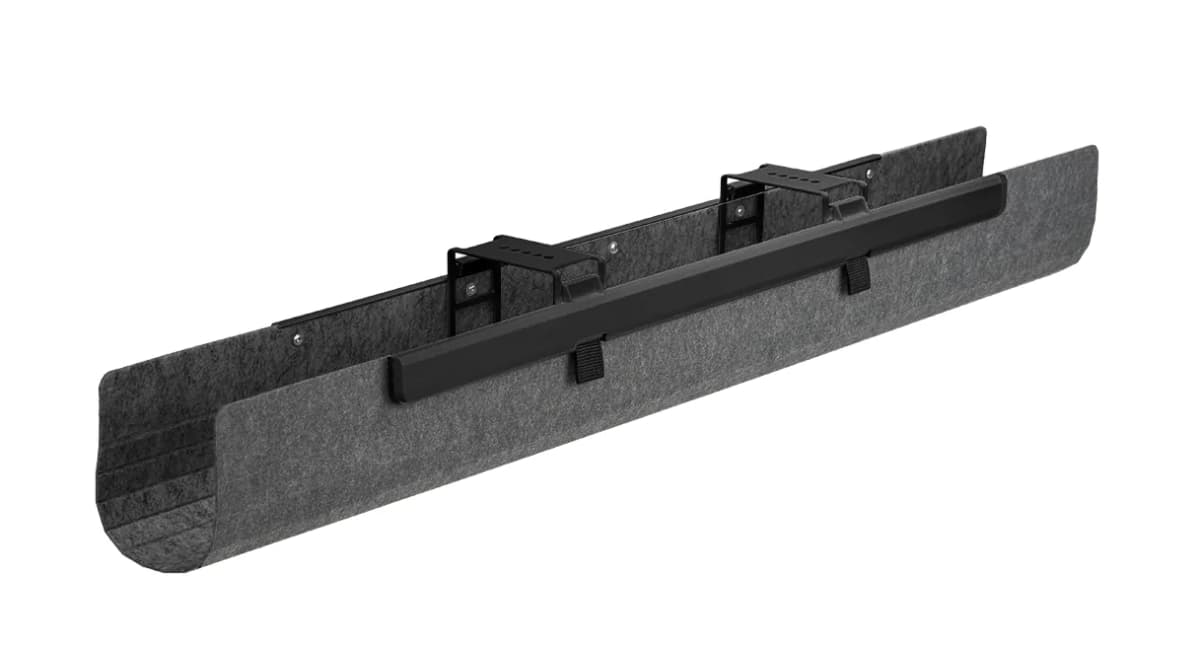
- under-desk cleanup: Mount-It! Under Desk Cable Tray
- simple desk fix: Bluelounge CableDrop
- sleeve for small bundles: Alex Tech Split Sleeving
- wall raceway: DELAMU Cord Cover Raceway
How we narrowed the list
Cable-management pages get bloated quickly, so this one stays disciplined on purpose. We gave extra weight to products that solve a distinct cable problem instead of overlapping with one another, work in ordinary home-office setups, are easy to add without rebuilding the entire workstation, and improve the visible setup rather than just the underside.
That is why the list covers one tray, one clip, one sleeve, and one raceway instead of a dozen near-identical organizers.
Start with the mess point, not the accessory
The easiest way to create cable-management overlap is to shop by product category first.
That usually leads to buying a tray when the real problem is the power strip, a sleeve when the visible issue is a wall run, or clips when the bigger mess still lives under the desk.
The cleaner order is:
- identify where the mess is happening
- choose the product type that fixes that exact zone
- go deeper into the category-specific guide only if that zone is already confirmed
A sturdy tray that mounts under the desk and gets power strips and excess cable slack off the floor.
- Metal construction with under-desk clamp mount
- Holds power strips, adapters, and excess cable slack
- Mounts out of sight to keep floor area clear
A small adhesive clip that keeps charging cables from falling behind the desk.
- Adhesive-backed clip attaches to desk edge
- Holds one cable in place without clamping
- Small enough to stay visually hidden
A flexible split sleeve that bundles a small cluster of cables cleanly and is easier to reopen later than rigid tubing.
- Split design opens along full length for easy insertion
- Flexible polyethylene resists heat and abrasion
- 10 ft length cuts to needed size
A paintable wall raceway for hiding visible cable runs from desk to outlet.
- Paintable cover blends with wall color
- Adhesive-backed installation without drilling
- Routes cables along baseboard or wall edge
What each category actually solves
The easiest way to waste money on cable management is to buy four versions of the same idea. Each type below exists because it fixes a different problem.
1. Under-desk cable tray
This is the foundation piece. If your power strip, monitor brick, and extra cable slack are still on the floor, everything else is cosmetic. A good tray creates a place for the mess to live out of sight.
The Mount-It! tray works well for this role because it is purpose-built for under-desk mounting and gives you a consistent place to route power-related clutter.
If you are trying to choose the tray itself for a tighter desk footprint, Cable trays that work on small desks is the more specific follow-up.
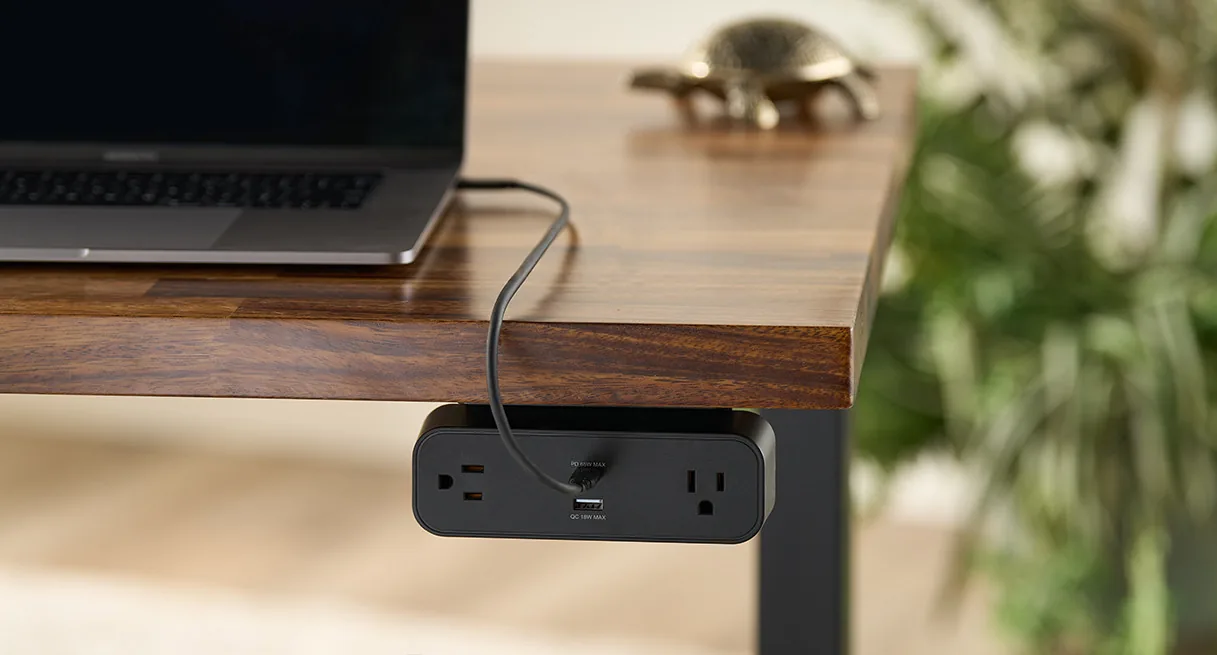
If the tray is fine but the strip itself still needs a cleaner home, Under-desk power strips for cleaner cable runs is the more specific follow-up.
If the cables mainly converge around a laptop landing zone, display lead, and charger cluster, Laptop docks that keep small desks cleaner is the more relevant follow-up than another generic organizer.
2. Cable clips
Cable clips solve the smallest but most frequent annoyance: charging leads slipping away every time you unplug them. A good clip does not need to be fancy. It needs to hold position and make the desk feel predictable.
Bluelounge CableDrop is a classic example because it is intentionally simple and designed for surface-level cable retention rather than big routing jobs.
If the cable problem is really “where do the headphones live between calls,” a hook solves that better than another clip. Headphone hooks for better desk organization is the better follow-up for that situation.
If the cables mainly die inside one shallow drawer with dongles and chargers piled together, Desk drawer organizers for shallow desks is the cleaner follow-up than another clip.
3. Cable sleeve
Sleeves are for cable bundles that move together. This matters most on sit-stand desks, monitor arms, or any setup where multiple leads travel down the same path. A sleeve makes the bundle feel like one clean run instead of five separate cords.
For desk setups, a smaller sleeve is often better than an oversized one because it stays neater and is easier to route.
4. Wall raceway
If a cable run must stay visible as it travels toward an outlet, a raceway is the cleanest answer. It is especially useful when the desk is away from the wall or when you want the setup to look polished in a living space rather than just a home office.
The key is choosing a raceway that is paintable, easy to trim, and large enough for your actual cable bundle.
The right order to buy these
If you are building this up gradually, buy them in this order: under-desk cable tray, cable clips, cable sleeve, then wall raceway.
That order gives the biggest visual improvement first and keeps you from overbuying accessories before the core mess is solved.
What to avoid
Avoid oversized sleeves for tiny cable runs, relying only on adhesive clips for heavy cables or power bricks, adding a wall raceway unless the cable run is visible enough to justify it, and skipping desk-edge or underside measurements before choosing a tray.
Related reading
- Headphone hooks for better desk organization
- Under-monitor headphone stands for narrow desks
- Under-desk power strips for cleaner cable runs
- How to place a cable tray under a small desk without losing knee room
- Cable trays that work on small desks
- Laptop docks that keep small desks cleaner
- Under-desk drawers that work on small desks
- Desk drawer organizers for shallow desks
- Desk mats that fit compact setups
- Monitor risers that improve posture and desk organization
- Desk accessories that keep a workspace clean and minimal
- How to set up a small desk without losing usable space
- Standing desks that fit small spaces