
Desk footrests get recommended too casually and dismissed too casually.
That is why a lot of people end up confused about them.
Some buy one when the real problem is the whole desk. Others avoid one because it sounds like an optional comfort extra, even though it would solve a very real fit problem in their setup.
The practical answer is simpler:
you need a footrest when the chair has to be high enough for your arms, but your feet no longer stay supported naturally.
That is the real use case.
OSHA and Mayo Clinic keep the same basic target in view: feet supported, knees comfortable, thighs not compressed, shoulders relaxed, and arms able to reach the keyboard without hiking upward. A footrest matters when it helps you get there. It does not matter when it is just another object under the desk.
Quick answer
You probably need a footrest if:
you raise the chair to reach the keyboard correctly and your feet stop resting flat; your thighs feel pressure because you are trying to keep your feet on the floor anyway; you keep tucking your feet under the chair or wrapping them around the base; the desk is slightly too high, but otherwise the setup is close.
You probably do not need a footrest if:
the desk is dramatically too high or too low; the chair is poorly adjustable; the desk underside has no usable leg clearance; the real problem is monitor depth, keyboard height, or desk size.
That is the short version.
What a footrest actually fixes
A footrest is not mainly about luxury.
It is about restoring support when the chair and desk relationship forces a compromise.
This usually happens in one of two ways:
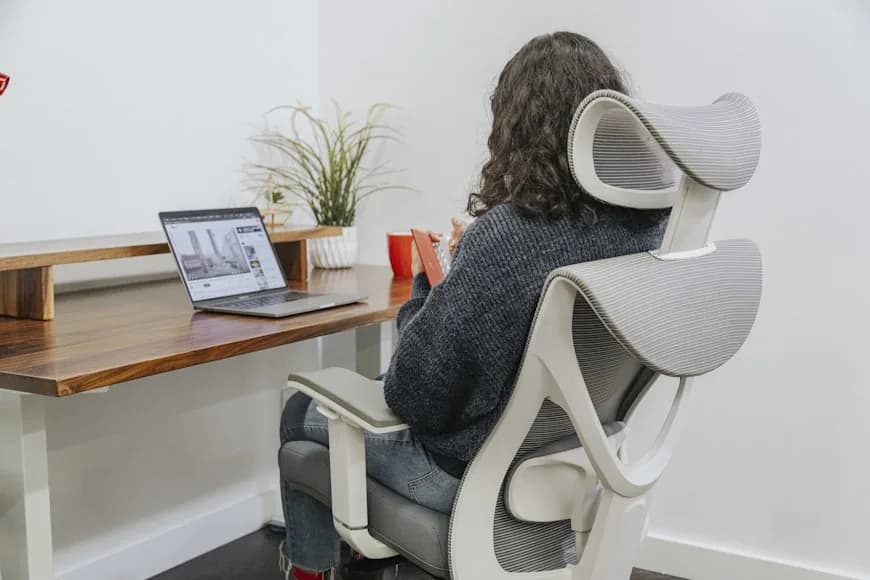
- You raise the chair so the elbows and keyboard line up better.
- Once the chair is high enough, the feet no longer sit comfortably on the floor.
That is the moment where a footrest becomes useful.
Mayo Clinic's workstation guidance says to adjust the chair so your feet rest flat on the floor, or on a footrest, with thighs roughly parallel to the floor. OSHA uses the same logic in its workstation checklist language: feet should be supported, not left hanging, and the lower body should have stable support while you work.
So the footrest is not the starting point.
It is the follow-through after the chair is adjusted for arm and keyboard height.
The best sign you need one
The clearest sign is this:
your upper body feels better when the chair is higher, but your lower body feels worse.
That can show up as:
heels not fully touching the floor; pressure under the thighs; hips feeling slightly unstable in the chair; a habit of bracing the feet on the chair base instead of the floor; small shoulder relief after raising the chair, followed by new discomfort below the knees.
That is exactly the kind of mismatch a footrest is meant to solve.
The workstation is close. It just needs support to reach the floor from the new chair height.
When the real problem is not the feet
A footrest gets blamed for failing when it was never solving the right problem.
It will not fix:
a desk that is too high overall; a center drawer or frame crossbar that steals leg space; a keyboard that sits too high because the work surface is too thick; a monitor that forces the whole body too far forward; a chair that cannot adjust properly to your body.
This is why some people try a footrest, feel no improvement, and conclude footrests are useless.
Sometimes the issue is not “unsupported feet.” Sometimes the issue is “bad workstation geometry.”
If the desk is the wrong height, or the keyboard is still too high, or the knees are jammed into hardware underneath, a footrest may only decorate the problem.
If that sounds familiar, go next to How to position your keyboard and mouse for shoulder comfort and Ergonomic chair settings that actually improve comfort before assuming the answer lives under the desk.
A footrest is most helpful on fixed-height desks
This is where footrests make the most sense.
With a fixed-height desk, you often cannot lower the work surface to meet your arms. So you raise the chair instead. That may help the shoulders and elbows immediately, but now the feet lose contact with the floor.
That is the textbook footrest scenario.
On an adjustable-height desk, the better move is usually:
lower the desk first; adjust the chair second; add a footrest only if support is still missing.
In other words:
fixed-height desk: footrests are often genuinely useful; adjustable-height desk: footrests are sometimes useful, but less automatically necessary.
That distinction matters.
What a good desk footrest should do
If the answer is yes, the next question is what kind of footrest actually helps.
The useful features are not mysterious:
enough height to meet your feet after the chair is raised; a stable base that does not slide or tip; enough surface area to support both feet; a shape or angle that avoids forcing an awkward knee bend; ideally some height adjustability.
OSHA's seating guidance is especially useful here. It notes that a footrest should be deep enough to support the whole foot, large enough to allow some side-to-side and forward movement, and positioned to avoid excessively bent or overly straight knees. Height adjustability is preferred.
That means the right footrest is not just “something under your feet.”
It should create a repeatable, supported position.
Hard platform vs soft cushion
This is where people often buy the wrong category.
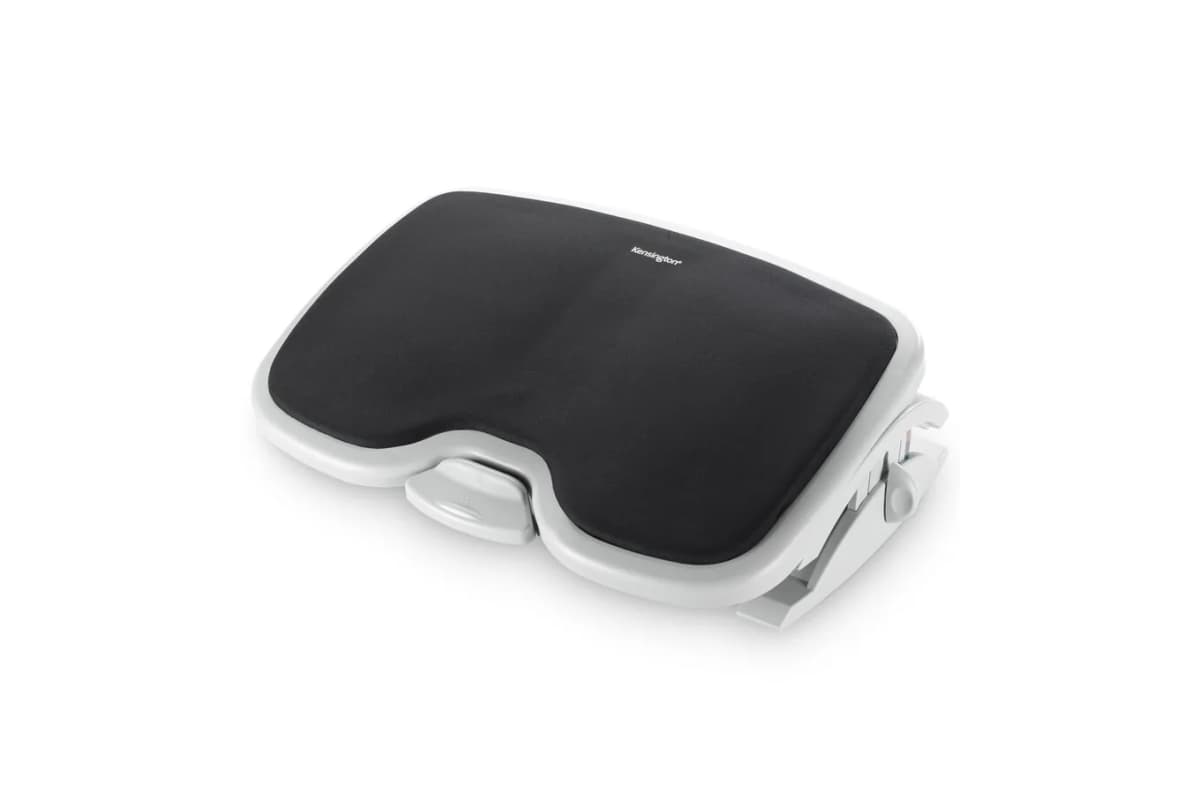
Hard or adjustable platform
Better when:
the real problem is desk height mismatch; you need stable support; you need angle or height adjustment; you work at the desk for long stretches.
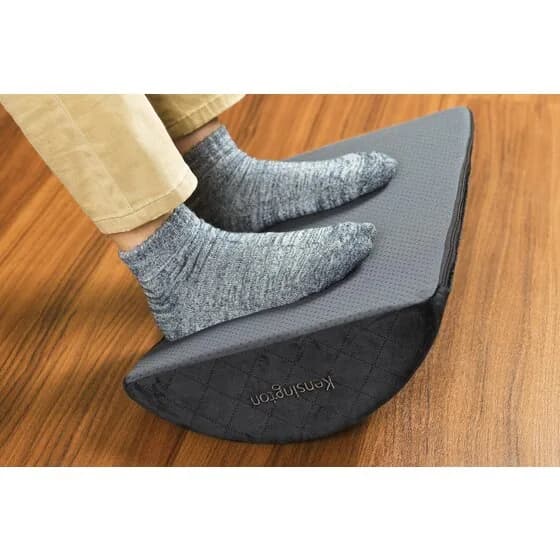
Soft foam or cushion-style rest
Better when:
the workstation already fits pretty well; you mainly want softer under-foot pressure relief; you dislike rigid textured platforms; you care more about comfort feel than precise adjustment.
This is why not every “footrest” recommendation is interchangeable.
Some products are ergonomic tools. Some are comfort accessories.
They are not solving exactly the same problem.
If you are buying based on posture and workstation fit, start with the ergonomic-tool side first.
A simple two-minute test
If you are not sure whether you need a footrest, do this:
- Sit back in the chair with your shoulders relaxed.
- Adjust the chair to the height that makes the keyboard feel easiest to reach.
- Check whether your feet now rest flat and comfortably on the floor.
- Check whether your thighs feel supported without being compressed.
- Notice whether you instinctively brace your feet on the chair base or tuck them backward.
If the chair height feels right for the arms but wrong for the feet, a footrest is probably a sensible next step.
If both the arms and feet still feel wrong, the bigger workstation fit probably needs attention first.
Small desks make this more common
Compact desks make this issue more likely for two reasons.
First, they are often fixed-height.
Second, small desks often come with compromises underneath:
crossbars; shallow depth; storage aprons; drawers that reduce knee space.
That means the lower body already has less room to settle into a calm position. When the chair then gets raised to match the desktop, foot support can disappear quickly.
This is one reason compact setups benefit from cleaner under-desk planning. If the area already has a cable tray, storage basket, and bulky drawer competing for the same space, a footrest can become harder to place correctly.
If the desk underneath already feels crowded, pair this guide with Under-desk drawers that work on small desks and How to set up a small desk without losing usable space.
So, do you actually need one?
Usually yes if:
your chair height is correct for typing, but your feet no longer rest comfortably; your desk is fixed-height and slightly too tall for you; your lower body feels unsupported after fixing your upper-body posture.
Usually no if:
the desk itself is fundamentally the wrong height; the chair is the real problem; the under-desk area is too blocked to place anything well; you are trying to use a footrest to compensate for a workstation that needs a bigger change.
That is the honest answer.
A footrest is a real ergonomics tool, but only for a specific problem.
What to buy if the answer is yes
If you have confirmed that the workstation is close and the missing piece is supported feet, go next to Footrests that improve desk posture and circulation.
That roundup breaks the category into the practical lanes that matter:
adjustable office footrests; movement-friendly footrests; budget active options; softer comfort-first options.
That is a much better way to choose than just buying the softest thing you can find.
Bottom line
You actually need a footrest when raising the chair improves arm and shoulder position, but leaves the feet unsupported.
That is the real use case.
If your setup is close, a footrest can help restore lower-body support and make the whole desk position feel more stable. If the workstation is not close, the footrest is usually not the first fix.
So the practical order is:
- set chair and keyboard height first
- check whether the feet still rest well
- add a footrest only if support is missing after that
That is the difference between using a footrest intelligently and just adding one more object under the desk.