
At this level, the decision is no longer "Which chair is ergonomic?"
Both the Herman Miller Aeron and the Steelcase Leap are serious ergonomic chairs. The real question is what kind of ergonomic chair you want to live with every day.
These two chairs solve the same problem from very different directions:
Aeron is a size-based mesh chair with a more engineered, suspended feel.; Leap is a one-size upholstered chair with deeper day-to-day adjustment and a more conventional cushioned seat.
That difference matters more than brand hype.
If you choose the wrong one, you can still end up with a premium chair that never feels quite right. If you choose the right one, either can anchor a genuinely strong long-hours setup.
Quick verdict
Choose Aeron if you want breathable mesh support, prefer a firmer suspended seat feel, and are willing to choose the right size instead of assuming one chair fits everyone.; Choose Leap if you want easier fit flexibility, a more forgiving upholstered seat, and stronger everyday adjustment for shared use or posture changes through the day.
That is the short version.
The longer version is that Aeron is often the better choice for people who know exactly what they want, while Leap is often the safer choice for people who want a premium chair that is easier to adapt.
1. Fit philosophy is the biggest difference
This is the part many comparisons bury too far down.
The Aeron is not really one chair. It is a sizing system.
Herman Miller publishes Aeron in A, B, and C sizes, and the official size/fit reference says users should choose based on height and weight. The same reference also notes that B and C sizes are tested and warranted for users up to 159 kg, while A size is tested and warranted up to 136 kg.
That leads to two real-world consequences:
Aeron can fit exceptionally well when you choose the right size.; Aeron is easier to get wrong if you buy based on reputation instead of fit.
Leap is much simpler. Steelcase treats Leap as a single main chair platform with a broader adjustment range instead of a multi-size lineup. On the current official EU product page, Steelcase lists Leap with:
seat height: 410-540 mm; usable seat depth: 415-490 mm; width between arms: 410-510 mm; tested weight limit: 150 kg.
That makes Leap easier to recommend when:
you are not sure which chair size you need; the chair may be shared between users; you want more room to tune fit with seat depth and arms instead of choosing between body sizes.
So the fit question is not just "Which chair is better?"
It is:
Do you want a chair built around size selection, or a chair built around one-frame adjustability?
For many buyers, that answer decides the whole comparison.
The 3-Point Engineering Fit
Engineering-grade chair selection depends on three physical intersections: Thigh Clearance, Reach Arc, and Lumbar Pivot.
- Thigh Clearance: For the Aeron, ensure your popliteal height (floor to underside of knee) matches the seat depth. If you are under 5'6", an A-size Aeron prevents the seat edge from pressing into the back of your knees.
- Reach Arc: The armrests should align with your natural "elbow drop" when your shoulders are neutral. The Leap's 4D arms offer a wider lateral range (up to 510mm) compared to Aeron's width-adjustable options.
- Lumbar Pivot: The Aeron’s PostureFit SL targets the sacrum, whereas the Leap’s LiveBack system moves with the thoracic spine. This is a "fixed-anchor" vs "dynamic-flex" engineering choice.
2. Seat feel is not remotely the same
This is where the Aeron and Leap stop feeling interchangeable.
On Herman Miller's official Aeron specs page and price book, the chair is built around 8Z Pellicle suspension, optional PostureFit SL, and the balanced Harmonic 2 Tilt system. The result is a chair that feels more suspended, more ventilated, and less padded.
That is why Aeron tends to appeal to people who:
run warm; dislike foam seats that trap heat; want a firmer, more tensioned sitting experience; like a chair that feels engineered rather than cushioned.
Leap goes in a different direction.
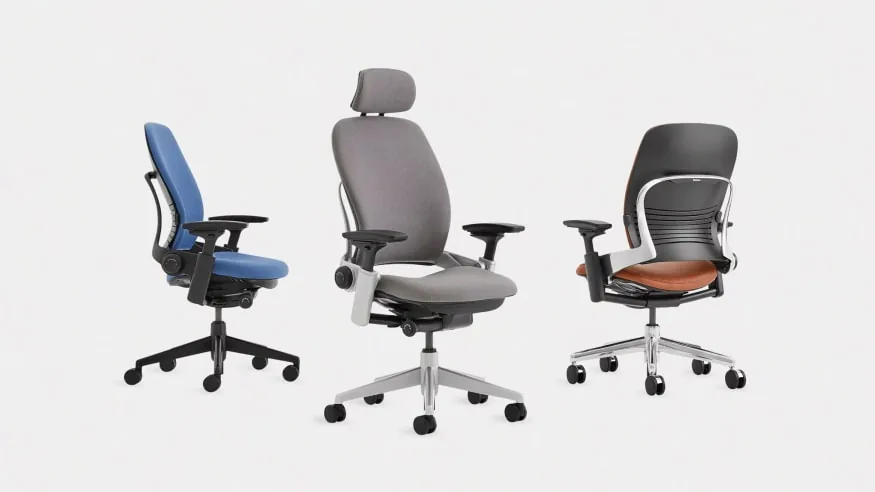
Steelcase's official Leap materials focus on LiveBack, adjustable lumbar, lower back firmness, and the way the back changes shape as posture changes. The chair also keeps a conventional upholstered seat and back, so the sitting experience is softer and more familiar than Aeron's mesh suspension.
That tends to make Leap the stronger fit for people who:
want more cushioning; dislike the taut feel of suspended mesh seats; shift posture frequently through long work sessions; want strong support without the "technical" feeling of Aeron.
Neither approach is automatically better.
But they are different enough that this is not something you should treat as a minor spec detail.
If you already know you love mesh chairs, Aeron becomes much easier to defend. If you prefer a more forgiving padded seat, Leap usually becomes easier to live with.
3. Leap is usually stronger for adjustment depth
Aeron is highly adjustable, but the kind of adjustability you get depends on the configuration you choose.
Herman Miller's price book shows that Aeron arm behavior changes meaningfully by option:
fixed arms; height-adjustable arms; height-adjustable arms with pivot; fully adjustable arms.
Tilt behavior also changes by spec:
standard tilt; tilt limiter; tilt limiter with seat angle.
So Aeron can be very adjustable, but only if you choose the right version upfront.
Leap is simpler in daily use. Steelcase's official materials consistently highlight:
adjustable seat depth; adjustable lumbar; lower back firmness control; recline tension adjustment; recline lock positions; fully adjustable arms.
The most important detail is Steelcase's Natural Glide System. Steelcase says Leap's seat glides forward as you recline so you stay in your vision and reach zone instead of drifting away from the desk.
That makes Leap especially compelling for users who:
actually recline during the workday; want easier shoulder and arm positioning; need to fine-tune the chair often instead of setting it once and forgetting it.
So if your main decision criterion is adjustment depth, Leap usually has the clearer edge.
If your priority is a more sculpted, set-and-support sitting experience with the right size and back support option, Aeron still makes a strong case.
4. Aeron is more size-sensitive, Leap is more forgiving
This is the most honest way to frame the risk.
When Aeron fits you well, it can feel unusually "locked in" in a good way. The right size, the right back support option, and the right arm spec can make it feel extremely deliberate.
But that precision is also why Aeron is less forgiving of a lazy buying process.
If you buy the wrong size, the chair does not magically become adaptable later.
Leap usually handles uncertainty better.
Because it relies more on seat-depth range, arm range, lumbar tuning, and recline controls than on a size choice, it is easier to recommend when:
you are buying sight unseen; the chair will be used by more than one person; you know you want premium ergonomics but do not want to overthink body-size selection.
That does not make Leap universally better.
It makes Leap the lower-risk premium buy for more people.
5. Home-office fit and visual presence
This is more subjective, but it still matters.
Aeron looks like what it is: a design-icon office chair. That can be a positive or a negative depending on the room.
In a visible home office, Aeron often feels more intentional and more sculptural than heavily padded corporate chairs. The mesh frame and cleaner visual profile can actually make it feel less bulky than its reputation suggests.
Leap reads more like a traditional premium task chair. It is not unattractive, but it is less of a design object and more of a serious office chair.
So:
choose Aeron if you want the chair to feel more iconic and visually sharp; choose Leap if you care more about functional comfort than design presence.
If your chair is going to sit in a bedroom office or a living-area setup, that difference may matter more than you expect.
6. Both are premium, but Aeron is usually the bigger spend
This is not a budget comparison.
Herman Miller's January 2026 Aeron price book lists the base work chair at $1,651 before arm, tilt, and back-support upgrades. On Steelcase's current EU shop, the standard Leap listing showed €1,219 when I checked on March 31, 2026.
The practical takeaway is not that one exact number matters forever. It is that:
both chairs live in the premium tier; Aeron usually asks for more money once you configure it well; Leap often gives you a broader adjustment set for less money than a similarly serious Aeron build.
That changes the value discussion.
If you are buying for breathable mesh feel, iconic design, and size-based fit, Aeron can still justify the premium.
If you are buying for ergonomic flexibility per dollar, Leap is usually easier to defend.
7. Who should buy which
Buy the Herman Miller Aeron if:
you run warm and strongly prefer breathable mesh; you like a firmer, more suspended seat feel; you are willing to choose the correct size carefully; you want an iconic chair that still feels high-performance years later.
Buy the Steelcase Leap if:
you want a more forgiving one-chair-fits-most approach; you prefer an upholstered seat and back; you care about adjustment depth and reclined work posture; you want a premium chair without leaning as hard into the Aeron price tier.
Bottom line
If you want the cleanest answer, here it is:
Aeron is better when you know you want mesh, know you want the Aeron feel, and are willing to buy the right size instead of treating fit as an afterthought.; Leap is better when you want a premium ergonomic chair that is easier to adjust, easier to share, and easier to recommend without knowing the buyer's body specifics as precisely.
That is why this comparison does not really come down to which chair is "more ergonomic."
It comes down to whether you want:
precision through sizing and suspended support. or flexibility through broader adjustment and a more forgiving seat feel.
For most buyers who want the safest premium recommendation, Steelcase Leap is the easier answer.
For buyers who specifically want the Aeron experience and know that mesh, sizing, and ventilation are exactly what they want, Aeron still earns its reputation.
Chairs worth evaluating next
If this comparison helped you narrow the decision, these are the two chairs worth trying in person.
The iconic mesh chair. Sized precisely, breathable, and built for long-term posture support.
- Three sizes (A, B, C)
- PostureFit SL support
- Breathable 8Z Pellicle mesh
- 12-year warranty
Broader adjustment range, more forgiving seat feel, and easier to recommend without knowing exact body specs.
- LiveBack technology
- Adjustable lumbar depth
- Seat angle adjustment
- 12-year warranty