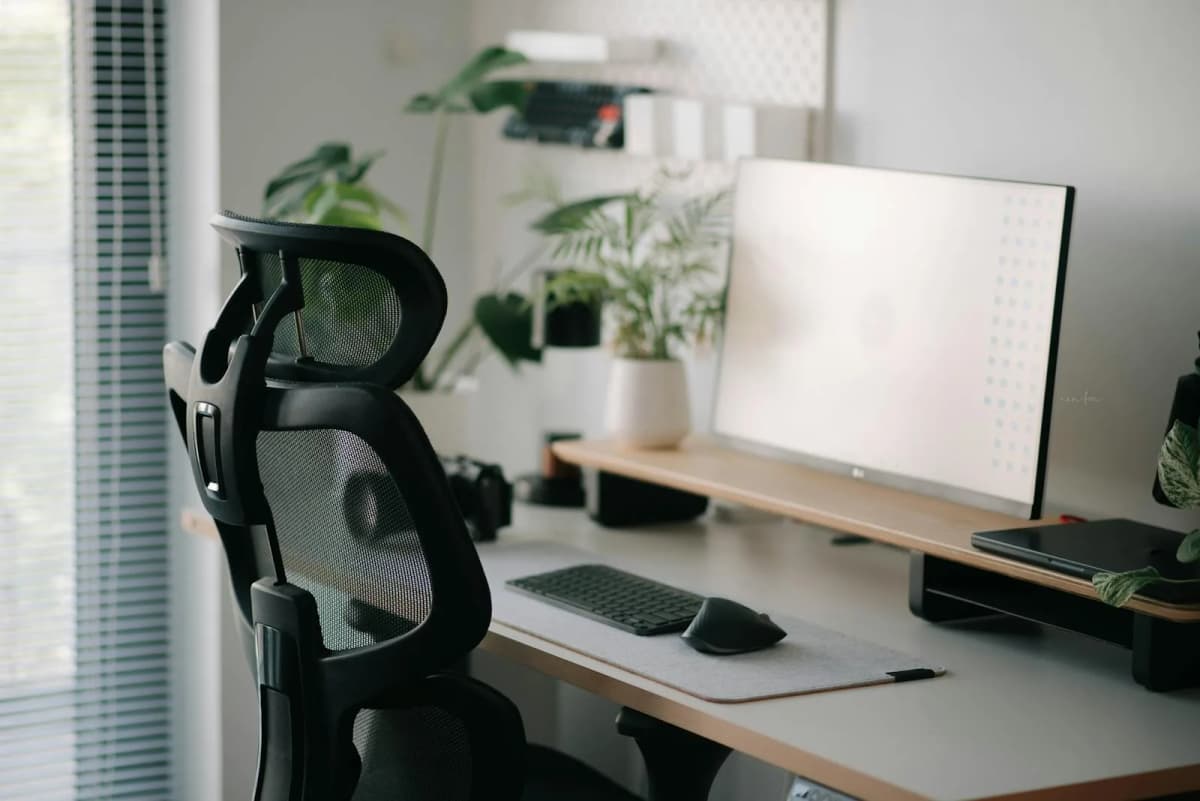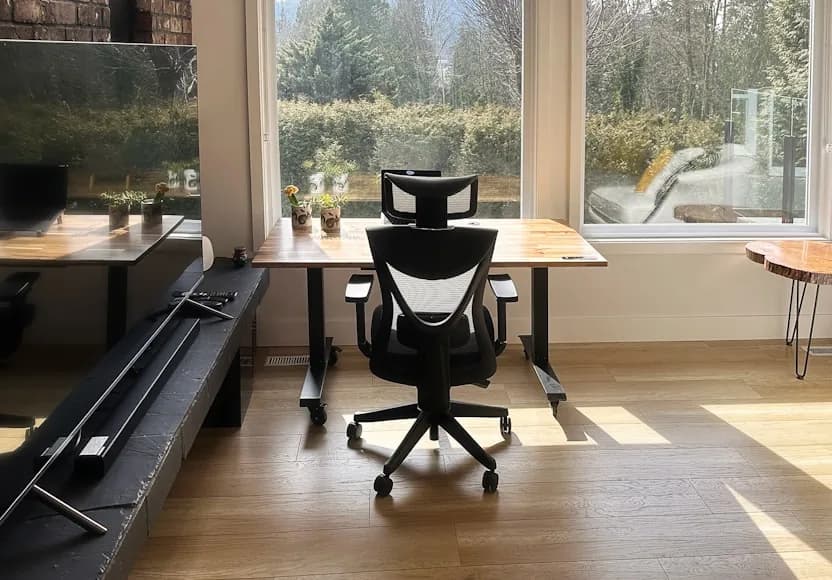

Small home offices punish the wrong chair faster than bigger rooms do.
That happens for two reasons at once. The wrong chair can feel awkward at the desk, and it can make the whole room look heavier and tighter even when nobody is sitting in it. In a bedroom office, apartment corner, or visible work nook, those two problems are really the same problem.
That is why this guide uses a different filter from a lower-back roundup. The question here is not just whether the chair is ergonomic. It is whether the chair earns its footprint in a smaller room.
This refresh is built from current official product pages, spec documents, and manufacturer guides. The fit calls here are editorial inferences from those published details, not hands-on testing.
- cleanest all-around pick for visible rooms: Branch Ergonomic Chair
- best serious-work chair in a compact footprint: Steelcase Series 1
- strongest adjustment set without huge visual bulk: Haworth Breck
- most configurable mesh task-chair option: HON Ignition 2.0
How we narrowed the list
This page is intentionally narrower than a general office-chair roundup.
For a chair to stay here, it needed to do one or more of these well:
keep a believable footprint beside a narrower desk; avoid exaggerated visual bulk in a room that still needs to feel calm; offer arm and seat adjustments that make tucking in easier; justify its size with real ergonomic value instead of just looking impressive.
That is why the list leans toward chairs with better size discipline and cleaner room fit instead of simply chasing the most fully loaded task chairs available.
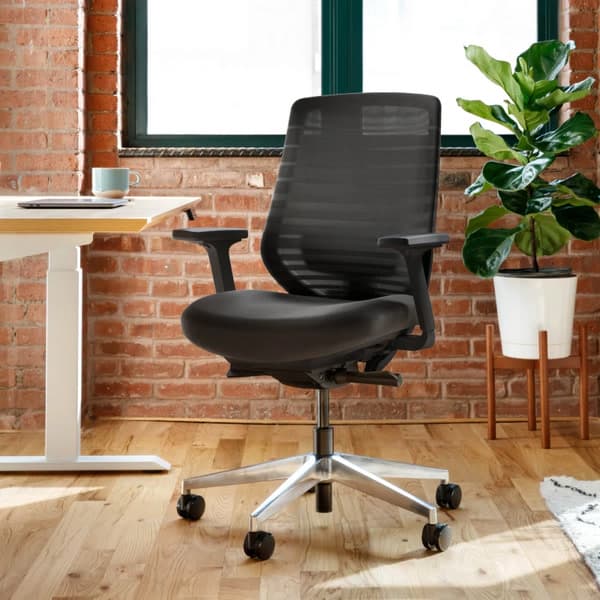
A cleaner-profile ergonomic chair with removable arms, sensible proportions, and a more residential feel than most office chairs that still keeps the core ergonomic adjustments intact.
- Branch lists chair height at 38"–42", seat height at 17"–21", and seat depth at 18"–22"
- Current product page lists armrest width at 25"–29", a 20° tilt range, and removable armrests
- A calmer silhouette helps it sit more naturally in bedrooms, corners, and mixed-use rooms
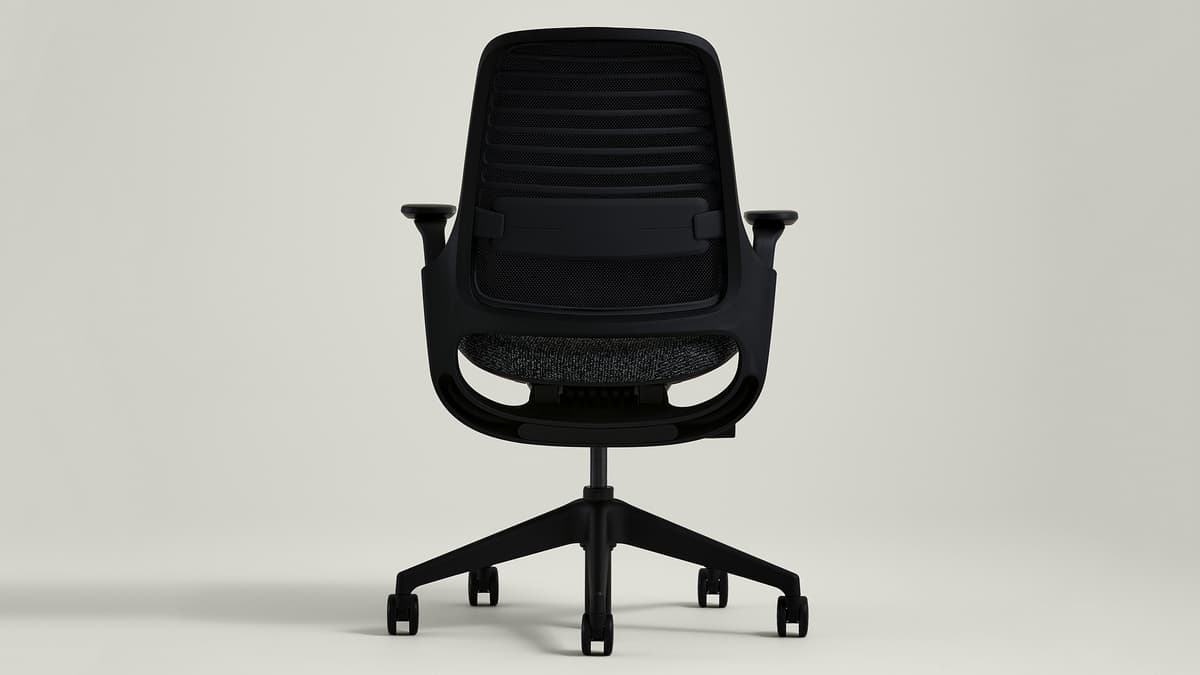
A more office-forward chair that still stays compact enough for smaller rooms, especially if the goal is fitting real ergonomic range into a tighter workstation.
- Steelcase spec guide lists overall width from 23.5" to 27" and overall depth from 21" to 23.75"
- Width between arms starts at 16", with 5" of seat-height adjustment and 2.25" of seat-depth adjustment
- Armless configuration is available for tighter desk-clearance needs
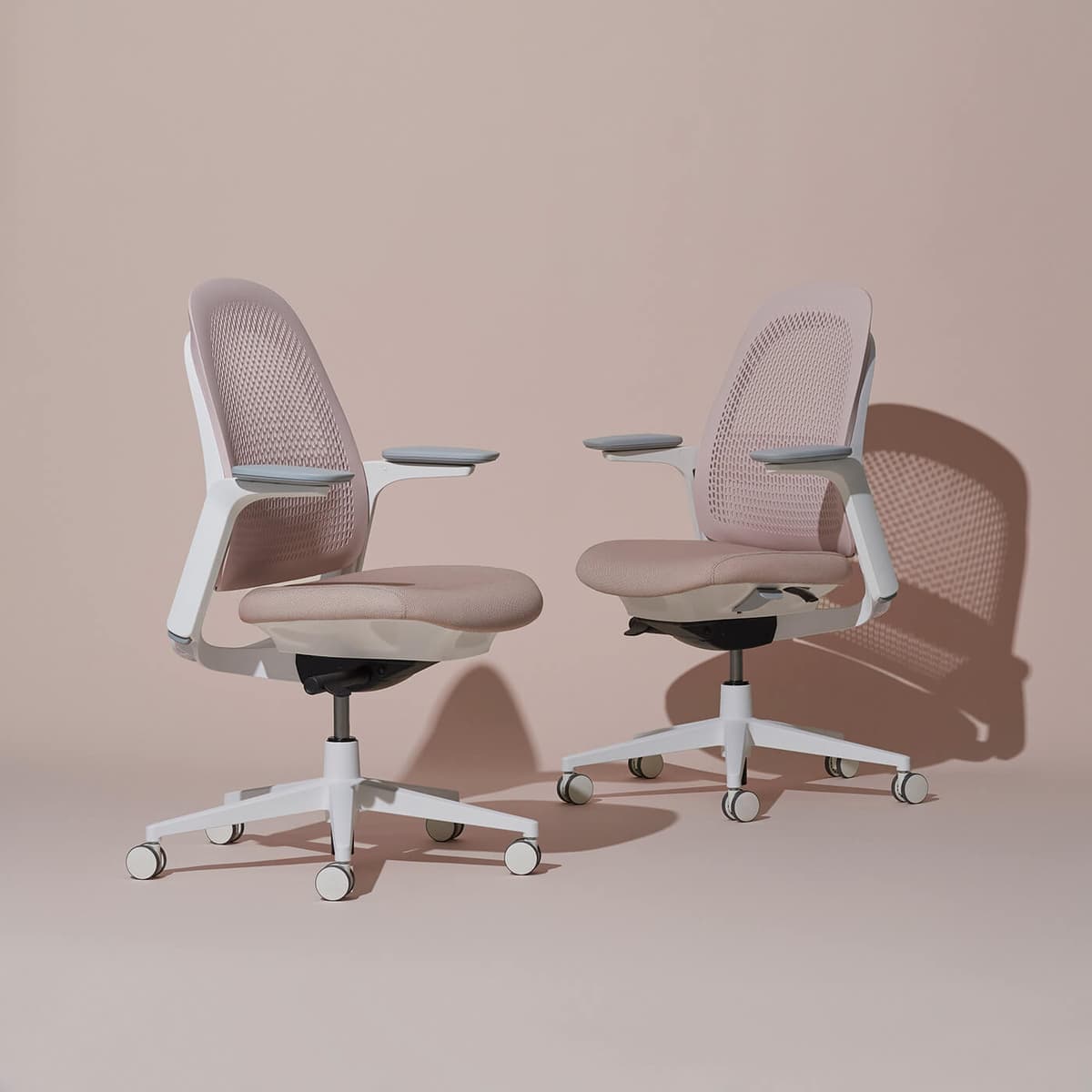
A lighter-feeling task chair that still brings height-adjustable lumbar, seat-pan depth adjustment, and 4D arms without looking as visually heavy as many fully featured office chairs.
- Haworth says height-adjustable lumbar, 3-position back stop, 4D arms, and adjustable seat pan depth all come standard
- Current page also highlights a responsive weight-activated synchronized tilt mechanism
- The GeoStretch back gives the chair a cleaner, less blocky presence than many broad task-chair backs
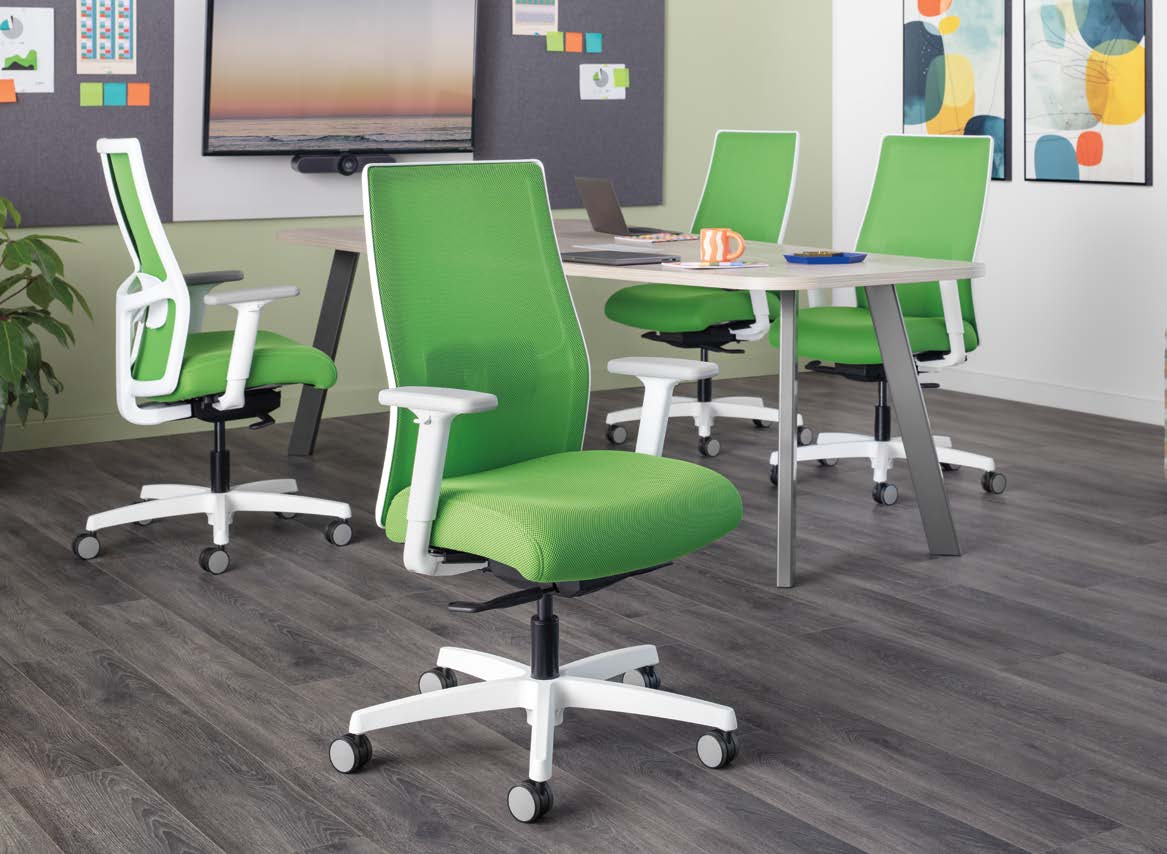
A more configurable task-chair platform for buyers who want mesh airflow and flexible adjustment controls, as long as they are willing to verify the exact configuration they are considering.
- HON's current functionality guide includes adjustable lumbar support, tilt tension, and seat glide
- The guide says the back can lock in multiple positions or recline freely
- A good fit when you want a mainstream mesh task chair without moving into a large executive profile
What actually matters in a small home office
The smaller the room, the less forgiving the chair becomes.
That changes the checklist.
Instead of only asking whether the chair is adjustable enough, ask:
does it tuck in cleanly?; do the arms help or fight that?; does the backrest make the room feel heavier?; does the chair still feel worth it once you account for how much space it takes?.
That is why this page leans so hard on footprint, arm behavior, and visual bulk. Those details are often what separate a good chair for a home office from a good chair for a much bigger workspace.
If your main problem is back pain rather than room fit, Ergonomic office chairs for lower back support is the better follow-up. If your issue is room layout more broadly, Home office setup ideas for small apartments is the better next read.
1. Branch Ergonomic Chair
Branch Ergonomic Chair is still the easiest recommendation for visible home-office corners because it balances actual ergonomic value with a cleaner silhouette than most traditional task chairs.
Branch's current product page lists:
chair height of 38"–42"; seat height of 17"–21"; seat depth of 18"–22"; armrest width of 25"–29"; a 20° tilt range; removable armrests.
That is exactly the kind of mix that matters in a smaller room.
Branch makes the most sense when:
the chair stays visible in the room all day; the desk corner needs to feel lighter, not more corporate; you still want real ergonomic basics instead of a style-first side chair.
Strong fit for: smaller rooms where the chair needs to look intentional, not intrusive.
Main tradeoff: it covers the basics well, but it is not trying to match the most office-forward chairs on raw adjustment depth.
2. Steelcase Series 1
Steelcase Series 1 is the strongest serious-work pick in a compact footprint because Steelcase gives you unusually solid ergonomic range without letting the chair grow into a big executive presence.
The current Steelcase spec guide lists:
overall width from 23.5" to 27"; overall depth from 21" to 23.75"; width between arms from 16"; seat height from 16.5" to 21.5"; seat-depth adjustment over 2.25"; an available armless option.
That is a lot of real fit range for a chair that still makes sense beside a modest desk.
Series 1 makes the most sense when:
the office is small but the work is serious; you need the chair to tuck closer to the desk; arm adjustment and seat tuning matter more than softer styling.
Strong fit for: buyers who want the most convincing ergonomic depth in a chair that still behaves well in a tighter room.
Main tradeoff: the visual language is more office-like than Branch, so it reads more as work equipment than room-friendly furniture.
3. Haworth Breck
Breck is the strongest adjustment-heavy chair here that still avoids looking oversized.
Haworth's current page highlights:
height-adjustable lumbar; a 3-position back stop; 4D arms; adjustable seat pan depth; a responsive, weight-activated, synchronized tilt mechanism; a three-zone GeoStretch back.
That combination is strong for a small room because the chair earns its footprint without turning into a visually massive chair.
Breck makes the most sense when:
you want more tuning depth than the calmer, cleaner options give you; the room is small but you do not want to compromise too hard on adjustability; you want a feature-rich task chair that still feels visually disciplined.
Strong fit for: small home offices where ergonomic flexibility matters, but the chair still has to look controlled rather than bulky.
Main tradeoff: it is still a full-featured task chair, so the overall presence is more assertive than a simpler home-office chair.
4. HON Ignition 2.0
HON Ignition 2.0 is the most configurable mesh task-chair option here, which makes it appealing for buyers who want practical controls without climbing into a more premium tier.
HON's current functionality guide highlights:
adjustable lumbar support; tilt tension; seat glide; a back that can lock in multiple positions or recline freely.
That is a useful setup when your room is small but you still want a mainstream task chair with flexible controls.
Ignition makes the most sense when:
you want mesh airflow; you want more than the simplest home-office adjustment set; you are willing to confirm the exact build before buying.
Strong fit for: buyers who want a configurable task-chair platform and do not mind doing a little more spec checking.
Main tradeoff: because the line is more configuration-driven, it is less of a clean one-click recommendation than the other three.
Which chair profile makes the most sense
The cleanest way to buy for a small room is to start with the room constraint first.
pick Branch Ergonomic Chair if the chair has to feel calm and home-friendly; pick Steelcase Series 1 if the room is small but the ergonomic demands are still high; pick Haworth Breck if you want the richest adjustment set without a huge visual penalty; pick HON Ignition 2.0 if you want a configurable mesh task chair and do not mind a closer spec check.
That is a more useful way to shop than asking which chair is “best.” Small rooms punish the wrong shape and the wrong visual weight just as much as the wrong lumbar support.
What to check before you buy
Before buying, check:
your desk width and how far the chair arms can tuck under it; the chair's maximum arm width versus your actual desk clearance; whether the backrest shape makes the room feel heavier than you want; whether the seat depth still makes sense if the desk is shallow or close to a wall.
That last point matters more than it sounds like. A chair can technically fit the room and still feel awkward if the desk setup forces you to sit farther forward than the chair wants.
Bottom line
The best chair for a small home office is usually the one that keeps the room feeling under control while still giving you enough real ergonomic value to justify the space it takes.
That is why Branch stays the easiest recommendation for visible rooms, Steelcase Series 1 stays the strongest compact serious-work option, Breck works so well as the feature-rich middle ground, and HON remains the configurable mesh choice if you are willing to verify the exact build.