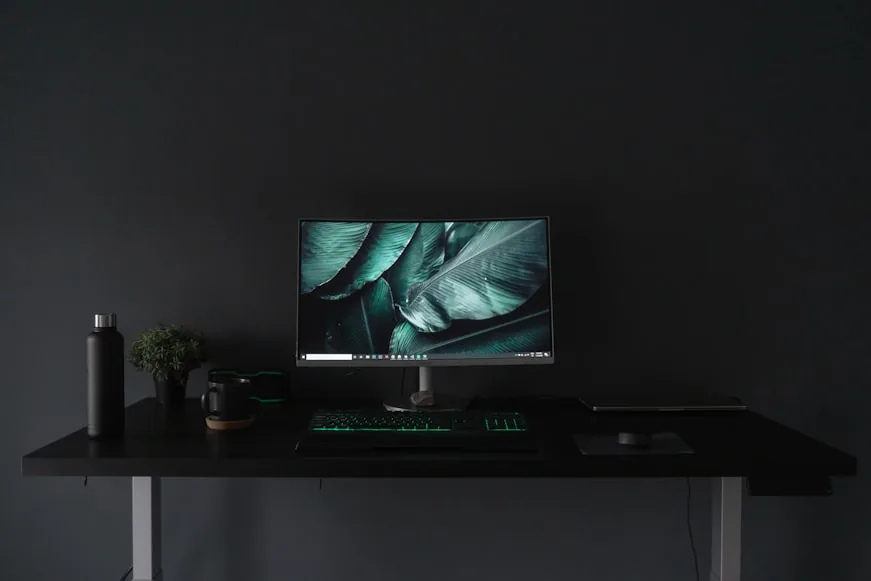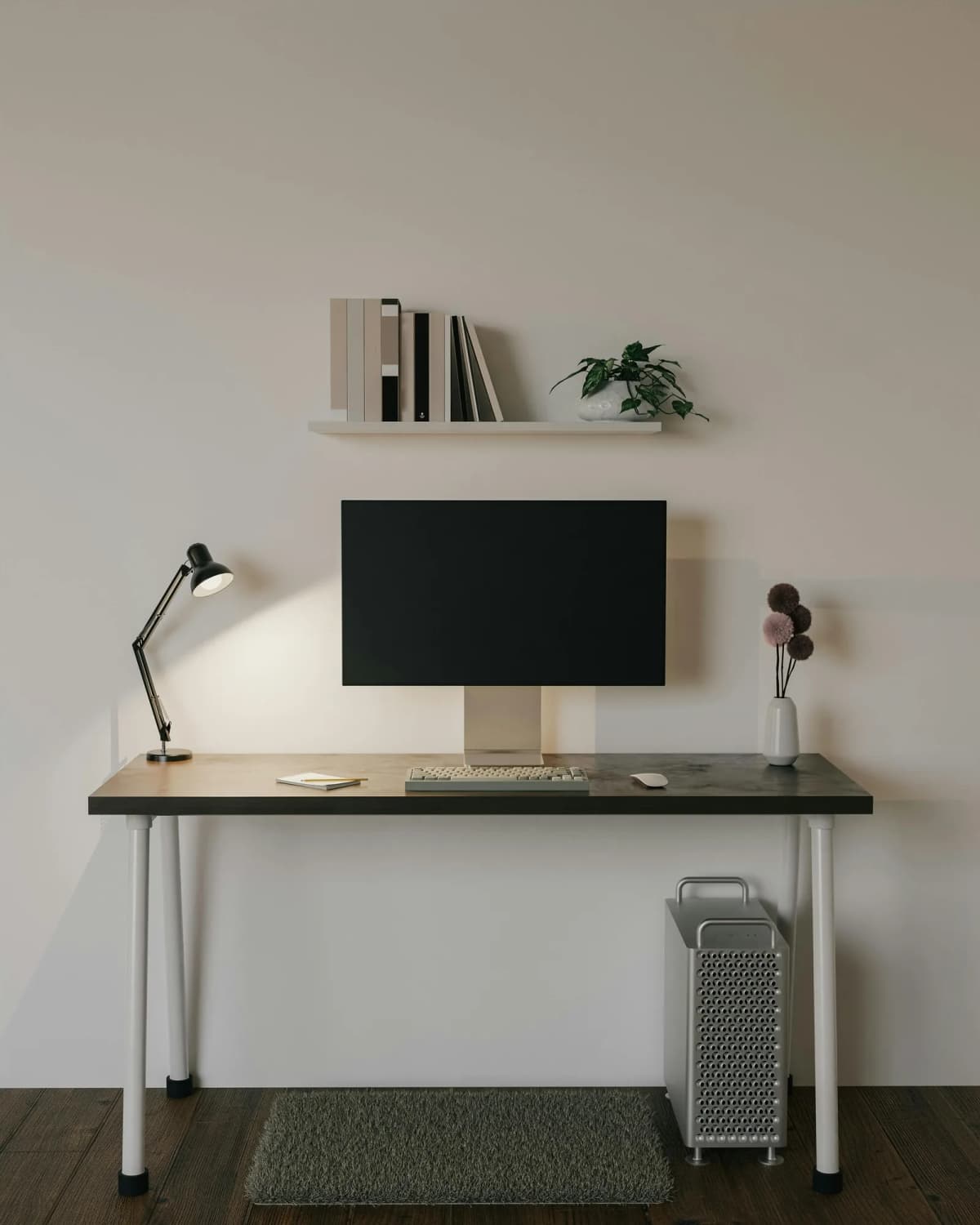

If your current setup is already decent, a standing desk is one of those upgrades that can feel either obviously worthwhile or strangely underwhelming.
That is because the upgrade is real, but the reason people buy it is often fuzzy.
Some people want less sitting. Some want more energy. Some want to fix discomfort. Some just feel like a standing desk is the next "serious setup" move once a chair, monitor, and desk are already in place. Those are not the same motivations, and they do not all lead to the same result.
The clearest way to think about it is this:
a standing desk is usually worth it when you want more position variety during the workday and your setup can actually support that shift well.
It is much less worth it when you expect it to rescue a layout problem, cure discomfort by itself, or make an already good desk setup feel dramatically different overnight.
That is also the pattern in the ergonomics guidance and evidence. CCOHS says the point of a sit-stand desk is to let users alternate body positions more often, but it also warns that standing too long can create its own problems and that ergonomic setup matters in both sitting and standing positions. OSHA keeps the desk question equally practical: the work surface still needs to support neutral posture, monitor placement, and adequate leg clearance. And the research base is helpful in a more restrained way than a lot of marketing: sit-stand desks consistently reduce sitting time, but the health, productivity, and discomfort outcomes are more modest and mixed than the sales copy usually suggests.
The short version
If your current setup is already decent, a standing desk is more likely to be worth it if:
- you want an easier way to break up long sitting periods
- you already know you like alternating positions during the day
- your current desk is fine but fixed-height limitations keep your setup from adapting to you cleanly
- you work long enough hours that posture variation would actually get used
It is less likely to be worth it if:
- you mainly want it to fix pain that probably comes from monitor, chair, or keyboard placement
- your current desk still has unresolved depth, width, or layout problems
- you think you will stand all day, even though most people end up alternating
- the cost will block more important upgrades
That does not make the standing desk bad.
It just means the best reason to buy one is usually movement variety and adjustability, not setup prestige.
What a standing desk genuinely does well
The most consistent argument for a standing desk is also the least glamorous one.
It makes it easier to stop sitting in exactly one position for most of the day.
That matters. Mayo Clinic is direct that less sitting and more movement generally contribute to better health, and CCOHS frames sit-stand desks around the ability to alternate body positions rather than remain fixed in one posture. The stronger systematic reviews on sit-stand desks point in the same direction: they are reliably useful for reducing sedentary time at work, even if the broader health outcomes are less dramatic than the category is sometimes marketed to suggest.
That makes a standing desk valuable for people who are not looking for a miracle. If your current setup is already pretty good, the real upgrade is not "suddenly perfect ergonomics." It is that you gain another working posture without rebuilding the whole station every time you want it.
That can be enough to justify the desk.
What a standing desk does not fix by itself
This is where a lot of people get disappointed.
A standing desk does not automatically fix:
- a monitor that is too high or too low
- a keyboard and mouse that still force overreach
- a chair and desk relationship that was already awkward
- a shallow desk that still puts the screen too close
- a room that barely fits the desk you already have
OSHA's desk guidance is useful here because it treats the work surface as only one part of the workstation. The desk still has to let the monitor sit in front of you at a usable distance, keep frequently used devices in the primary work zone, and preserve enough clearance and support to avoid awkward postures. If those basics are still wrong, a height-adjustable desk can simply give you the same problem at two different heights.
That is why standing desks often disappoint people who were really trying to fix something more specific than "I want more movement options."
The upgrade is worth it when your current desk is decent but too static
This is the cleanest yes-case.
If your current setup already works fairly well in sitting mode, but you keep wishing it could adapt during the day, a standing desk is easier to justify. That usually looks like:
- you feel okay overall but get stiff from staying in one posture too long
- your desk height is workable, not ideal
- you naturally like changing position while thinking, reading, or taking calls
- your work stretches long enough that the ability to alternate would actually get used
That is when the desk becomes a quality-of-use upgrade rather than a rescue purchase.
In other words, the desk is worth it when it adds flexibility to a setup that already makes basic sense.
The upgrade is not worth it when the money should go somewhere else first
If the setup still has a more obvious bottleneck, that bottleneck should usually win.
For example:
- if your monitor is too close on a shallow desk, desk depth or monitor support may matter more
- if your shoulders are lifted because the keyboard zone is wrong, changing the desk type will not solve that first
- if your chair fit is still bad, the standing desk is unlikely to feel like the breakthrough you hoped for
- if your room is tight enough that a bulkier or deeper desk will make the room worse, that trade is easy to regret
This is where a standing desk can quietly become the expensive version of buying around the real problem.
That does not mean a standing desk is never the right answer. It means it should not outrank the upgrade that removes the bigger daily compromise first.
If you are still sorting that out, Should you buy a better chair, a bigger desk, or a monitor arm first? and What to fix first when your workspace feels uncomfortable are the better first reads.
The room matters more than standing-desk marketing admits
This is especially true for URBNGEAR's kind of reader.
A standing desk is not only a movement tool. It is also a piece of furniture that changes the room.
In a small room, the wrong standing desk can create more visual weight, more cable-management friction, more chair-path problems, and more pressure on the space around it than a good fixed desk would. That is why the category looks more appealing in broad "home office" advice than it sometimes feels in real bedrooms, apartment corners, and mixed-use rooms.
If your current desk already fits the room well, the question is not just whether standing would be nice. It is whether the new desk would still preserve the things your current setup already does right.
That is why the standing desk is often more worth it in a larger dedicated workspace than in a smaller room where footprint discipline is the whole game.
If that sounds like your situation, Standing desks that fit small spaces is the more practical follow-up because the fit question matters as much as the sit-stand question.
One overlooked question: will you actually use the standing mode?
This is the quiet filter that saves people a lot of money.
A standing desk is only worth it if the standing position becomes part of your routine.
CCOHS specifically notes that early studies found some users drift back toward sitting for most of the time after the initial trial period. That does not mean the desk failed. It means the user may have liked the idea of variation more than the habit of using it.
So before buying a standing desk, it is worth asking:
- do you already stand for calls, reading, or short work blocks when you get the chance?
- do you like changing position during the day, or do you mostly want the identity of a standing desk?
- would you realistically use the feature three or four times a day, or only when you feel guilty about sitting?
Those answers matter more than a spec sheet.
A converter versus a full standing desk
If your current desk is genuinely decent, this is where the decision gets more practical. The full cut is Desk converter vs standing desk: which makes more sense?.
A converter can make sense when:
- the existing desk already fits the room well
- you want to test whether standing mode becomes a real habit
- you do not want to replace a desk that is already structurally fine
A full standing desk makes more sense when:
- the existing desk is only "decent" because you have tolerated its height or limitations
- you want cleaner cable management and more stable all-day use
- your current desk is good enough to keep, but not good enough to build around long-term
This is less about which option is universally better and more about whether the desk itself has already earned replacement.
A simple way to decide
If you want a clean filter, use these four questions:
- Am I trying to buy more movement variety, or am I trying to fix another setup problem?
- If the desk worked perfectly, what would still feel wrong afterward?
- Does my room actually support a standing desk without making the rest of the setup worse?
- Will I realistically use standing mode often enough for the upgrade to matter?
If your answers point toward variety, real use, and room fit, the desk is easier to justify.
If they point toward pain relief, vague productivity hopes, or an unresolved layout problem, the money is probably better spent somewhere else first.
Bottom line
If you already have a decent setup, a standing desk is worth it when you want real position variety and you know you will actually use it.
It is less worth it when you expect it to fix posture, solve discomfort by itself, or compensate for a desk, monitor, chair, or room problem that is still unresolved.
The honest case for a standing desk is not that it transforms every decent setup into a dramatically better one.
It is that it gives a good setup more flexibility, and for the right person, that flexibility is enough to make the upgrade genuinely worthwhile.
Related reading
- Standing desks that fit small spaces
- Desk converter vs standing desk: which makes more sense?
- FlexiSpot vs UPLIFT standing desks for small spaces
- Should you buy a better chair, a bigger desk, or a monitor arm first?
- What to fix first when your workspace feels uncomfortable
- Why your small desk setup still feels cramped