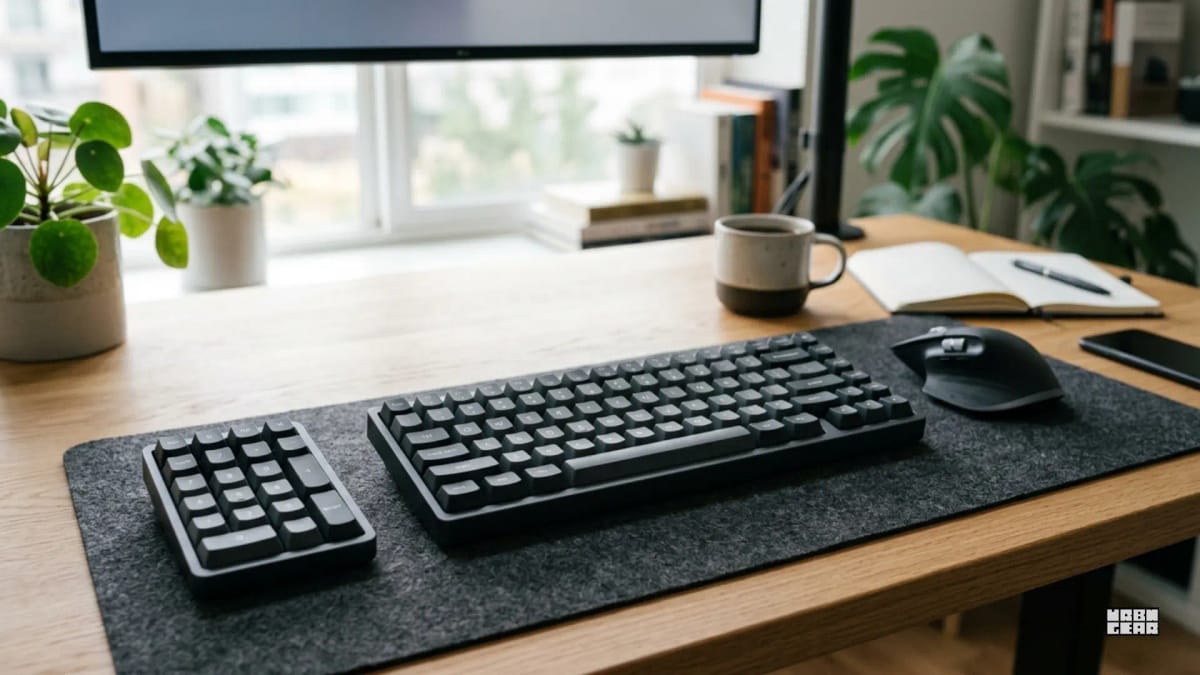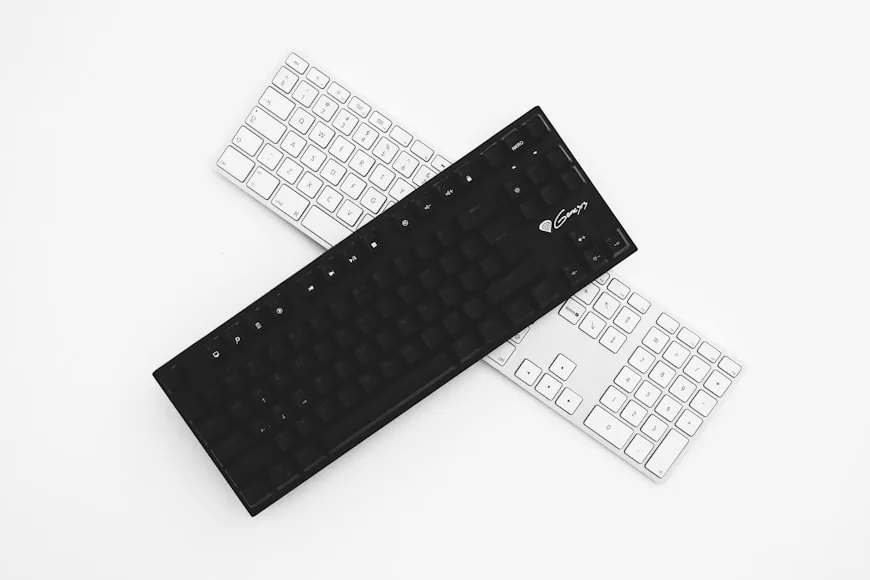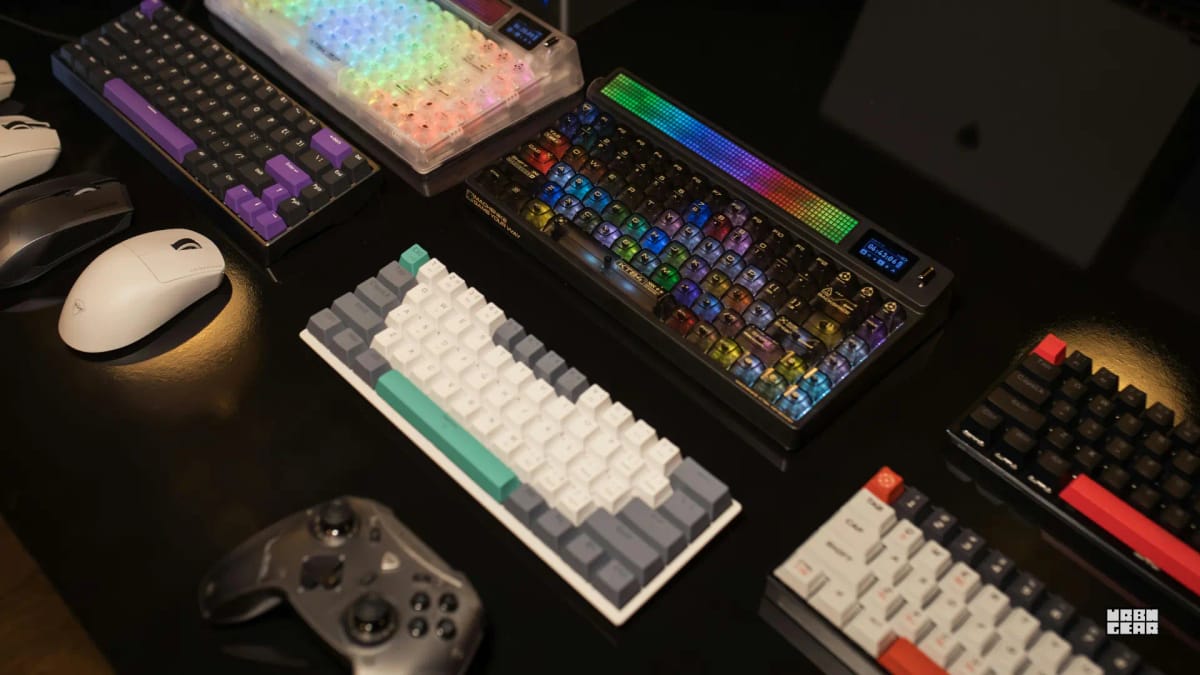

The usual version of this question is too shallow.
It gets framed as slim versus chunky, modern versus old-school, quiet versus mechanical. That is fine for keyboard hobbyists. It is not very useful for someone trying to get through eight or nine hours of work without the board becoming the most irritating object on the desk.
For work, the real difference is simpler. Low-profile keyboards usually ask less from an ordinary desk. Standard keyboards usually give back more only when the rest of the setup is already behaving.
That is why these two can feel so different in real use. One tends to feel better in the first few minutes. The other can feel better by the end of the week.
Why low-profile wins the first impression so often
Most fixed-height desks are not especially kind to keyboards with a lot of front height.
That is where low-profile boards make immediate sense. They sit lower, the hands do not have to climb as far to reach the keys, and the typing position feels closer to what many people already know from laptops. Even without changing anything else, the board can feel easier to approach.
That matters more than it sounds. A keyboard that starts too high tends to create the same small complaints over and over: the wrists feel slightly bent, the forearms never settle, the shoulders creep up, and the whole typing posture feels faintly uphill. It is not always painful. More often it is just tiring in a way that builds quietly through the day.
Low-profile boards do not solve every desk problem, but they remove one common source of friction very quickly. That is why they get described as "instantly more comfortable" so often. In many setups, they are.
Standard keyboards are usually better only when the desk is already sorted
Standard keyboards are not harder to use by default. They are simply less forgiving.
When the desk height is workable, the chair is set reasonably well, and the keyboard position is already close to where it should be, a standard board can feel more stable and more satisfying. The keys usually have more travel, the feedback is often clearer, and some people type more confidently on them because the whole board feels more substantial under the hands.
That is the part quick comparisons usually miss. A standard board can feel excellent in a setup that supports it and awkward in one that does not. The keyboard did not change. The amount of desk problem it had to absorb did.
This is also why some people try a low-profile keyboard, enjoy the easier starting position, and still go back to a regular one later. Once the desk fit is under control, they miss the deeper key feel or the firmer sense of contact.
The real issue is usually the front edge
Most people do not notice key travel first. They notice where their hands have to begin.
If the front of the keyboard is tall, the hands approach the keys from a steeper angle. On a good desk, that can be fine. On an average desk, it often means the board feels as if it is sitting on a little platform instead of part of the work surface.
That is where the low-profile argument becomes strong. A lower front edge gives you more margin for error. The desk can be a bit high, the chair can be slightly off, and the typing position can still remain usable. A taller board gives you less margin. It asks the desk, chair, and arm position to line up more closely.
That does not make low-profile the smarter choice for everybody. It does explain why people with completely normal desks often feel relief when they switch to one.
Laptop habits change the answer
People moving from a laptop to an external keyboard are not starting from zero. Their hands are already used to a low board with short travel.
That makes low-profile the easier adjustment in a lot of cases. The transition is smaller, and the keyboard feels familiar faster. A standard board can feel good later, but it often feels noticeably higher on day one.
The opposite is also true. Someone who already spends years on regular external keyboards may not find that lower profile especially helpful once the setup is tuned. In some cases, they end up feeling that the board is easier on the hands but less satisfying to type on, which is not the same thing.
That distinction matters. The better work keyboard is not always the softer landing. Sometimes it is the one that lets a person type more accurately and more naturally after the desk fit is corrected.
The wrong conclusion is common
A lot of people blame the keyboard when the desk is the bigger issue.
If a standard board feels too tall, the first thing to check is not the product page for a replacement. It is the current posture around it. Keyboard feet up, chair too low, desk too high, wrists parked on the desk edge, mouse sitting on a higher surface beside the board, all of that can make a normal keyboard feel worse than it should.
Low-profile keyboards often get credit for fixing these situations because they hide part of the mismatch. That is still a real benefit. If the desk is fixed and the user is not going to rework the whole setup, choosing the more forgiving board is a practical answer. But it helps to be honest about what is happening. Sometimes the low-profile board is better. Sometimes it is simply less demanding.
A more useful buying rule
Choose low-profile when the current desk already feels a little too high, when the present keyboard seems tall before it feels good, or when most of the day is split between a laptop and an external board. In those situations, the lower height usually solves a real problem.
Choose standard when the desk fit is already under control and the main complaint is not height but typing feel. If deeper travel, firmer feedback, and a more settled key feel help you work faster or more accurately, a standard board can still be the better long-day tool.
That is the cleaner way to judge it. Not by trend, not by aesthetics, and not by assuming the slimmer board is always the more ergonomic one. The real question is how much help the desk needs from the keyboard.
One test before replacing anything
Before buying a new board, flatten the one you already have. Put the feet down if they are raised. Pull it close enough that the elbows stay easy. Use it for one normal work block without forcing your wrists onto the desk edge.
If it still feels too tall, too steep, or slightly annoying the whole time, low-profile becomes a strong answer.
If it mostly starts feeling better once the position is cleaned up, the problem may be smaller than it seemed. That does not mean you have to keep the keyboard. It just means the decision should be based on the real cause, not the first symptom.
Where this lands
Low-profile keyboards are easier winners on imperfect desks. Standard keyboards are better only when the setup is good enough to let their stronger feel pay off.
That is why the safer choice for many work setups is low-profile, while the better choice for some well-sorted desks is still standard. The easier keyboard all day is not the one with the louder enthusiast case. It is the one that asks the least from the desk while still letting you type the way you actually like to work.