
Upgrading a chair is the most obvious move when you feel uncomfortable after long sessions. I did it too. It helped, but it didn’t solve the main problem — the discomfort always returned after a few hours.
That’s because long‑sit discomfort is usually a setup issue, not just a chair issue. The chair is one part of a system that includes seat depth, desk height, foot support, and how often you shift positions. When one of those is off, even a great chair feels wrong.
1.The three reasons a new chair doesn’t fix it
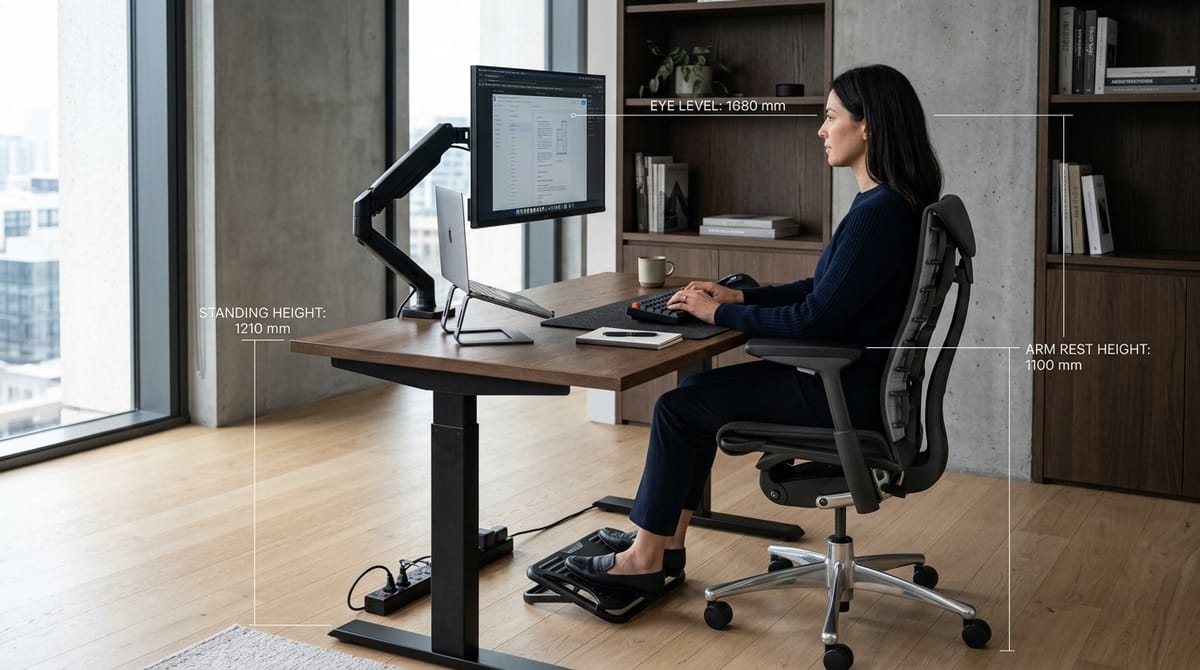
1. Your seat depth is wrong.If the seat is too deep, the edge presses behind your knees. If it’s too shallow, you slide forward and lose support. Most ergonomics guidance recommends leaving a small gap (about two to three fingers) between the seat edge and the back of your knees.
2. Your feet aren’t supported.If your feet don’t sit flat, you end up perching on the edge or hanging your legs, which shifts pressure into your thighs and lower back. The fix isn’t always a new chair — it’s proper seat height or a footrest so your feet can stay supported.
3. Your desk height is forcing the chair out of position.If the desk is too high, you raise the chair to match and your feet lose contact with the floor. If the desk is too low, you drop the chair and your arms angle up. Either way, the chair ends up “wrong” because the desk isn’t matching it.
2.The fix is a setup reset, not a shopping trip
Before you buy another chair, do a 10‑minute reset:
Set chair height so your feet are flat and your knees are roughly level with your hips.
Adjust seat depth so you keep that small gap behind the knees.
Line up the desk so your forearms can rest comfortably without shrugging.
Give your back something to lean into — don’t perch on the front edge.
Those changes fix more long‑sit discomfort than a new chair alone because they address the system.
3.When a chair upgrade actually helps
A new chair does matter if your current one lacks basic adjustment: no seat depth control, no supportive backrest, or a cushion that bottoms out. But even then, the chair only helps if the rest of the setup is matched to it.
If you want a chair‑first decision guide, How to choose an ergonomic office chair is the right next read.
4.The simplest long‑sit habit that makes a difference
Long sessions are hard on any setup if you never shift position. The best chair won’t replace movement. Small resets — standing for a minute, rolling your shoulders, or changing leg position — do more than most people expect.
You don’t need a medical plan. You need a workstation that fits, and a rhythm that doesn’t lock you into one posture for hours.